WARWICK, R.I., May 22, 2019 — InsureMyTrip, the first-and-only travel insurance comparison site to adapt machine learning technology to create a personalized experience for travelers, announced today the latest upgrades to its groundbreaking predictive algorithm. The recommendation engine is now faster and more precise than ever before – enabling travelers to find the right travel insurance plan roughly 15 to 20 times faster than comparing quotes manually online. In turn, this provides a radically different – and efficient customer experience for travelers.
Hurricanes and Travel Insurance
The new enhanced version can predict which travel insurance plans are most appropriate and relevant for those traveling during hurricane season to storm-prone destinations. This latest upgrade comes as travelers are bracing for the potential impact of the 2019 Atlantic Hurricane season.
“Travelers understand that bad storms can easily put trips in jeopardy. While there are travel insurance plans with specific hurricane-related coverages, travelers may have trouble identifying those plans. Our smart engine’s algorithms takes out the guesswork and automatically suggests plans with robust hurricane coverage. This technology empowers travelers to feel more confident with their travel insurance purchase,” says InsureMyTrip CEO Jim Grace.
This updated recommendation tool better identifies well-performing plans with specific hurricane-related coverage that also rate well with InsureMyTrip travel insurance experts and customers.
The latest version also better identifies specific coverages based on the user’s profile. For example, cruisers are typically concerned about missing the ship’s boarding time due to a flight delay or missed connection. The algorithm has already “learned” this attribute and will use this type of data to make a more intelligent decision, on behalf of the customer requesting a quote, and offer a travel insurance plan that will also include various missed connection and travel delay benefits.
InsureMyTrip is part of the Weather-Ready Nation (WRN) Ambassador™ program, an initiative of the U.S. Department of Commerce, National Oceanic and Atmospheric Administration (NOAA), to strengthen partnerships with external organizations toward building community resilience in the face of increasing vulnerability to extreme weather and water events.
About InsureMyTrip
It’s simple. InsureMyTrip finds you the right travel insurance plan, every time. InsureMyTrip is the authority on travel insurance. We are committed to empowering travelers to make the best possible insurance decisions by leveraging our technology, data intelligence, and expertise.
As Iceland has become one of the hottest cold-weather destinations, more travelers than ever are wondering if they need trip insurance for their visit. While travel insurance is not mandatory, it is strongly encouraged.
Iceland is known as the “Land of Fire and Ice,” and for a good reason. Iceland experiences extreme weather conditions, including volcanic eruptions. In 2010, the eruption of the Eyjafjallajokull volcano caused over 100,000 flight cancellations and a six-day travel ban across Europe.
Comprehensive travel insurance plans are a great option that can offer protection for flight delays and trip cancellations that are common with bad weather. Comprehensive plans also often provide additional benefits like baggage loss coverage or emergency medical evacuation.
Another common reason why people purchase travel insurance is to supplement domestic health insurance while abroad. Many health insurance providers do not cover travelers while they are outside of their home country, and accidents abroad can rack up huge medical bills. Unpaid medical expenses have led countries like Japan and Thailand to consider mandatory travel insurance for all foreign visitors. Travel medical plans can help travelers fill in any gaps in their domestic health insurance while they are visiting Iceland.
How Much is Travel Insurance to Iceland?
The cost of trip protection for Icelandic holidays will depend on the type of plan and the coverage that a traveler requires. Plan cost will vary based on several factors such as the number of travelers in your party, their ages, the length of the trip, and the type of coverage needed.
The general rule of thumb is that the richer the benefits plan, the more expensive the coverage will be. For example, some travelers opt to insure their total trip cost, while others only need a lean travel medical plan. InsureMyTrip has reviewed over a thousand plans to help find the right coverages to fit each traveler’s needs and budgets.
Is Iceland a Schengen Country?
Yes, Iceland is a Schengen County. Iceland is one of the many countries in the Schengen Zone. The Schengen countries have specific requirements regarding what insurance their embassies will accept before issuing a travel visa.
U.S. citizens traveling to Iceland are not required to get a Schengen Visa. However, if you are a U.S. resident who is not a citizen, the Schengen rule may apply to you. Starting January 1, 2021, U.S. citizens will need to apply for an ETIAS before they travel to Europe.
There is a list of countries whose citizens are required to obtain a Schengen visa before traveling to Iceland. If you do need a Schengen visa before your Icelandic vacation, you should consider purchasing a Schengen Visa travel insurance plan.
Do I Need a Passport for Iceland?
Yes, you will need a passport when traveling to Iceland. U.S. citizens traveling to Iceland should have a passport that is valid for at least three months beyond their intended departure date. The U.S. Embassy, however, would encourage travelers to visit with more leeway between your passport expiration date and departure date.
Your passport must meet the Schengen requirements, and if it fails to do so, you may be refused boarding. For this reason, the embassy strongly encourages travelers to have six months of validity remaining when traveling abroad, especially if you are visiting other Schengen countries.
Do I Need a Visa for Iceland?
As a result of the Schengen Agreement, U.S. citizens can visit Iceland without a visa for tourist and business purposes for up to 90 days. You will need sufficient funds and a return ticket to enter the country. Students who plan to study abroad in Iceland for more than three months will need to apply for a residence permit.
Iceland Travel Tips & Safety
Money & Currency Exchange
The currency in Iceland is the Icelandic Króna (ISK). Icelander pay for nearly everything with a credit or debit card, so travelers won’t need to exchange much cash. You might want to consider exchanging some funds for toll roads and tips for tour guides, but it is not necessary. Be sure to contact your bank and credit card companies to let them know of your travel plans before you leave for Iceland. It is best practice to bring multiple cards from different issuers, to prevent any issue accessing your funds abroad.
Iceland charges a value-added tax, commonly referred to as VAT, on many goods and services purchased within the country. If you keep your receipts, you may be eligible to receive a refund before you leave the country. When making a purchase, ask the shop clerk for a tax-free form. Complete the form and have the store sign it and attach the receipt.
VAT refunds are issued to non-citizens of Iceland who purchased qualifying goods and services. To get your refund, you will need to present a passport and take the goods out of Iceland within three months of the purchase date. Additionally, the products must cost a minimum of ISK 4,000 (approximately $33). Travelers will need to show these goods and the necessary documents at the airport before departure.
It is important to note that tipping is not required in Iceland. Service and VAT are included in the restaurant tab. Though it is much appreciated, visitors are not expected to tip.
Transportation
The easiest way for tourists to get around Iceland is to rent a car. Renting a car allows visitors to see more of the country and drive the Ring Road. If you plan on hitting the open road, you will need a card with a pin to get gas. Most credit cards do not come with a pin, and your card will be declined if you try to pump gas. The zip code you enter when using a credit card is not considered a pin, but a debit card would do the trick. An alternative to using a debit card would be to purchase a prepaid gas card.
Reykjavik has a bus system with service to all of the major towns and attractions, but there are no railways or trains. Another transportation alternative would be to take a domestic flight to quickly jet across the entire country. This is the fastest way to get around but can be pricey with checked bags and the potential for flight delays.
Culture
Icelanders often have a reputation for having a strange sense of humor or coming off as very dry. In reality, they are very warm and welcoming people who take kindly to strangers. Icelanders are incredibly well-educated and have some of the highest levels of literacy in the world. That natural curiosity can also be seen in their genuine interest to chat and get to know you. Icelanders tend to be heavy drinkers and will often encourage you to have a beer in hand to help break the ice.
Icelanders maintain a relatively simple diet comprised of mostly lamb, seafood, and dairy. Icelandic cuisine is not for picky eaters, but those feeling adventurous can try hákarl. Hákarl, which is a fermented shark dish that has been cured and hung to dry for several months, is the national dish of Iceland and a right of passage for many visitors.
Speaking the Language
Icelandic is the national language of Iceland. English is taught as a second language, and almost every Icelander speaks it fluently. But it always helps to learn a few words and phrases when going abroad! Iceland is a small country with a population of 338,000 people, so there are not many people who speak Icelandic. Even if you learn a few phrases, it will mean a lot to the locals that you took the time to learn. Here are a few phrases to help you on your travels:
Halló: Hello
Bless: Goodbye
Já: Yes
Nei: No
Takk: Thank you
Risk & Crime
Iceland is one of the safest places on earth for travelers. It is common to see parents meet up with friends in cafes and leaving their sleeping baby in the pram outside. Seeing unattended children can be shocking for those coming from countries with higher crime rates, but abductions and violent crime rates are very low in Iceland. The low crime rate makes it an ideal destination for solo travelers or students. That does not mean it is riskfree, however. The nightlife scene in Reykjavik can be intimidating to travelers, and there is always the threat of pickpockets in major tourist areas. Those planning a trip should check our travel advisories resource page for the latest information on Iceland.
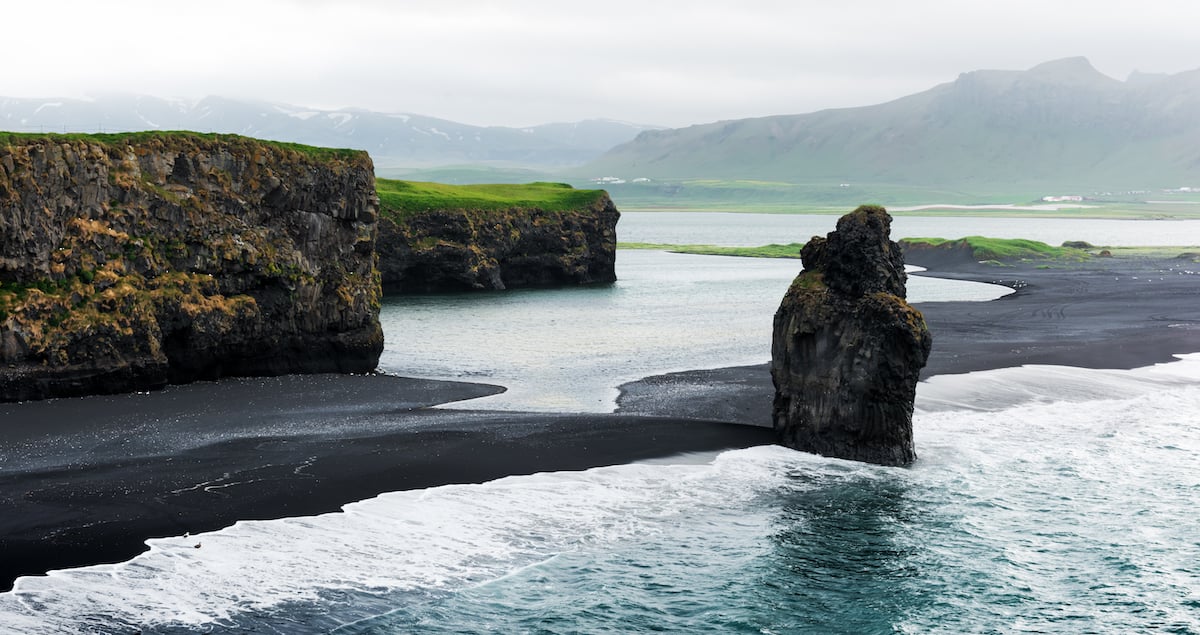
The most significant threat to tourists in Iceland is mother nature. The unforgiving weather can create hazards for travelers, so check forecasts and road conditions, especially if you are traveling during the winter. Road closures are often necessary due to winter weather, wind, and landslides. The Icelandic beaches are wildly popular tourist destinations, but the waves are deadly and unpredictable. The undercurrent is strong, the sea is ice-cold, and surprisingly tall waves can crash onto the shore even on the calmest of days. Stay alert and do not turn your back on the water. As tempting as it may be, don’t wander off and walk across icebergs. Although it may look safe and be connected to land when you set off, icebergs can quickly break off from the land, putting you in grave danger if it tips over.
Luckily a little common sense and self-awareness will go a long way towards staying safe in Iceland. If a guide or a sign advises you against challenging the elements, it is best to heed that advice.
Popular Destinations & Tourist Attractions in Iceland
Iceland has so much to see and offer, and travelers would be hard-pressed to try and do everything in one trip. Luckily, we’ve compiled a list of top Icelandic destinations to help you start mapping out your ideal itinerary. Whether you want to go bathing in a natural hot spring, drive the golden circle, or shred the slopes at one of their renowned ski resorts, you’re sure to make unforgettable memories during your travels to Iceland.
Top 10 Travel Destinations for Iceland
Reykjavik
Blue Lagoon
Mývatn
Golden Circle
Vatnajökull National Park
Reynisfjara
Akureyri
Jökulsárlón
Vik
Húsavík
Local Favorites in Reykjavik
When planning your trip to Iceland, Reykjavik can be a great place to go for authentic Scandinavian culture and international flair. It can also be a foodie’s paradise. To help you have an exciting (and delicious) experience, we’ve collected a few recommendations for what to do in Reykjavik that may help you travel like a local on vacation.
Lake Tjörnin
A small lake located in in the city center, Lake Tjörnin is a favorite walking, jogging, and cycling spot for locals. Depending on when you visit, the lake could be frozen over, making it perfect for ice skating, but year-round it’s a great spot to seamlessly fit into Iceland’s culture and gain an authentic experience. If you plan to do some adventurous eating in Reykjavik, you might just be able to find a local restaurant offering traditional plokkfiskur (i.e. fish stew).
The Reykjavik Art Museum
If you’re wondering what to do in Reykjavik, a trip to the Reykjavik Art Museum is a must for your itinerary. It is separated into multiple branches located throughout the city, so heading to multiple locations is the perfect activity for quickly acclimating yourself to Reykjavik’s different neighborhoods. Each location offers a range of genres and styles to enjoy, including the avant-garde works at Hafnarhus (Harbour House), the sculptures and paintings at Kjarvalsstaðir (named after Icelandic sculptor Jóhannes Kjarval), and outdoor public art at Ásmundarsafn (a sculpture museum and park). And, if you want to experience the culinary arts too, Ásmundarsafn’s location in the diverse heart of the city means you can find anything from Italian to Middle Eastern nearby.
The Videy Island
Perfect for a day trip, this small island is just off the coast of Reykjavik. If you choose to go here, you’ll find scenic walking trails, bicycle paths that wind through idyllic meadows, and more than 30 species of birds like arctic terns. If you’re looking for good eating in Reykjavik (or near it, in this case), you’ll also find the Viðeyjarstofa Café. One of few permanent eateries on the island, the café may offer traditional dishes featuring mussels or lamb, as well as lighter, casual pastry fare.
Protect your Reykjavik Trip with Travel Insurance
Your trip to Reykjavik should be focused on the country’s Nordic beauty and the city’s wealth of activities-not the setbacks that could arise. If unforeseen obstacles do come up, though, including lost or damaged luggage, delayed flights, and more, you may be able to protect yourself financially if you consider travel insurance for Reykjavik before your trip.
One of the best ways to start looking for affordable travel insurance is by comparing coverage options on InsureMyTrip.com. As the world’s first travel insurance comparison website, we offer unbiased information to help you learn about the benefits of travel insurance, a team of licensed professionals to answer your questions throughout your comparison journey, and ultimately help you buy the travel insurance for Iceland that best meets your needs.
U.S. / Iceland Embassy and Consulate Locations
U.S. Embassy in Iceland
U.S. Embassy Reykjavík
Engjateigur 7
105 Reykjavik, Iceland
Phone: 354.595.2200
Icelandic Embassy and Consulate in USA
Washington DC – Embassy of Iceland
House of Sweden
2900 K Street N.W. #509
Washington DC 20007 United States
Phone: 1.202.265.6653
New York, New York – Consulate General of Iceland
733 Third Avenue, 18th Floor (between 45th and 46th Street)
New York, NY 10017 United States
Phone: 1.646.282.9360
Disclaimer: The information contained in this article serves as a general overview of benefits and should only be used for informational purposes. Refer to your individual certificate of insurance for specific coverages, exclusions and benefits. When in doubt, please contact one of our licensed agents for additional assistance.
WARWICK, R.I., May 8, 2019 — InsureMyTrip, a NOAA Weather-Ready Nation WRN Ambassador™, launched a new hurricane preparedness campaign this week in an effort to help travelers best prepare for the season. As a dedicated NOAA partner, InsureMyTrip is committed to improving travelers’ readiness and responsiveness against extreme weather. To help travelers stay informed and be better prepared, this educational campaign includes several initiatives with content delivery across all platforms.
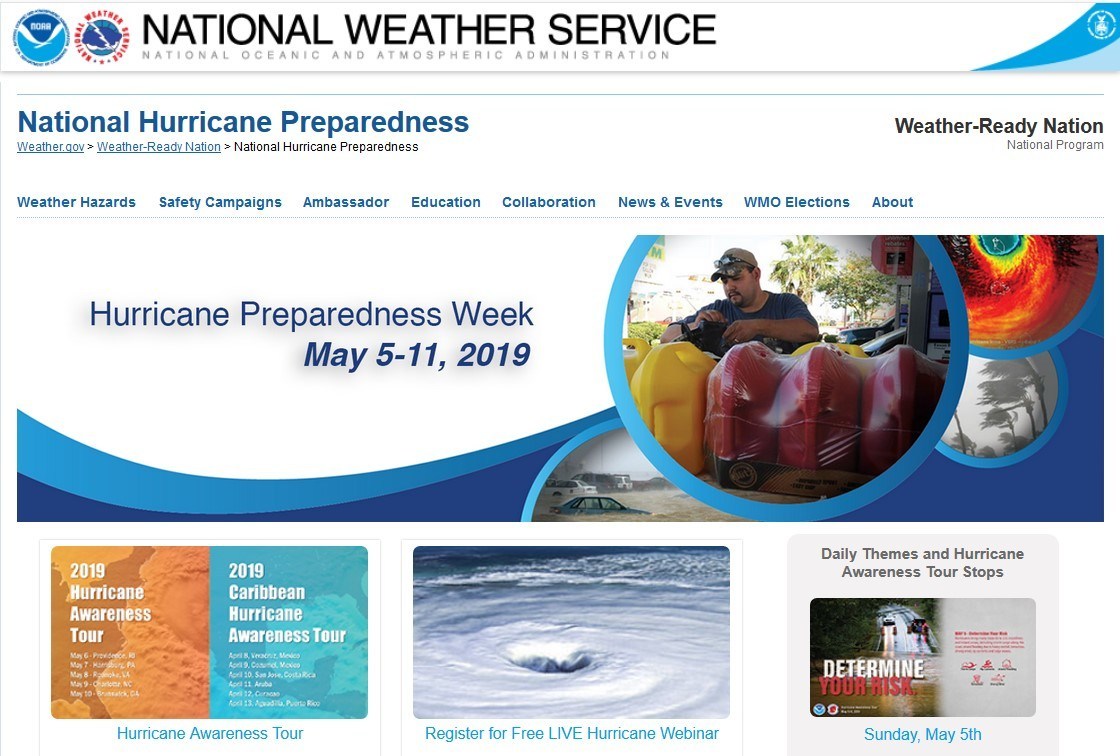
Photo Source: NOAA. Hurricane Preparedness Week is May 5-11, 2019. InsureMyTrip is committed to educating travelers as a proud Weather-Ready Nation (WRN) Ambassador™.
InsureMyTrip has expanded its Hurricane Educational Center to include more information to better assist travelers with their upcoming trip. The content hub also offers access to travel data, a free travel guide ebook, videos, and other resources.
Travelers can also subscribe to “Trips & Tips”, an InsureMyTrip podcast hosted by Abbey Zartman, available on iTunes and Spotify. The podcast will release new episodes related to hurricane preparedness throughout the 2019 season.
“More than half of the U.S. population has listened to a podcast. This gives us a great, direct way to speak to travelers about how to stay safe during hurricane season. We get to deliver our data and NOAA’s information in short, entertaining episodes that fit into a traveler’s busy lifestyle,” says InsureMyTrip Digital Marketing Specialist Abbey Zartman.
Understanding Hurricane Coverage
As National Hurricane Preparedness Week (May 5-11, 2019) is underway, travel insurance agents at InsureMyTrip are also reminding travelers about the advantages of buying trip insurance early. Once a storm starts forming, it is considered a foreseeable event and insurance coverage will no longer be available to cover losses related to that storm.
This season, InsureMyTrip predicts three out of four travel insurance customers will choose a comprehensive travel insurance policy. This type of policy provides a variety of benefits including emergency medical coverage, emergency travel services, baggage protection, trip cancellation and trip interruption coverage.
Travel insurance is an effective and cost-efficient way to cope with the risk of travel during hurricane season and to help guard against potential financial losses.
When it comes to severe weather, here are some examples of how insurance may enable travelers to receive reimbursement of pre-paid, non-refundable trip costs if they must cancel a trip due to severe weather-related issues that are covered under the trip cancellation benefit:
Flights are grounded due to a hurricane: Many plans will cover a traveler when common carriers such as airlines and cruise lines cease service due to weather. The cessation of services must be for a certain number of hours, usually 24-48.
Resort is in the path of a hurricane: A few plans will cover when the traveler’s destination is under a NOAA-issued hurricane warning.*
A hurricane damaged my hotel or resort: Many plans will cover a traveler when a hotel, resort, or vacation rental is devastated and made uninhabitable by a storm.
A hurricane damaged my home: Many plans will offer coverage when the primary home of a traveler sustains destructive storm damage that renders the home uninhabitable.
I changed my mind: For the opportunity to cancel a trip for reasons other than those listed as “covered reasons” on a policy, a traveler may consider Cancel For Any Reason (CFAR) protection.
CFAR is an optional time-sensitive benefit available on some plans that allow a traveler to cancel a trip for any reason, up to 48 hours prior to the scheduled departure. Reimbursement is usually 50-75% of the prepaid, non-refundable trip cost. A traveler must meet specific eligibility requirements and must purchase a policy with CFAR selected within 14-21 days of making an initial trip payment or deposit.
*With most comprehensive travel insurance plans, the NOAA-issued hurricane warning must be issued for the traveler’s destination within 24-48 hours of the traveler’s scheduled departure. The cancellation must also be more than 14 days after the traveler’s effective date for trip cancellation coverage. This means this coverage would not be available if the traveler is 15 days or closer to the departure of a trip.
Hurricanes and Airline Cancellation Policies
Flight cancellation policies vary by airline and circumstance. When an airline cancels a flight due to bad weather, most will try to rebook passengers on the next available flight.
Airlines are not required to reimburse travelers for losses incurred as a result of a canceled flight due to weather. Travelers concerned about protecting pre-paid, non-refundable trip expenses should buy travel insurance.
Travelers interested in learning more about insurance plans for travel during hurricane season can visit www.InsureMyTrip.com or call 1-800-551-4635 to speak with a licensed travel insurance agent.
InsureMyTrip is part of the Weather-Ready Nation (WRN) Ambassador™ program, an initiative of the U.S. Department of Commerce, National Oceanic and Atmospheric Administration (NOAA), to strengthen partnerships with external organizations toward building community resilience in the face of increasing vulnerability to extreme weather and water events.
About InsureMyTrip
It’s simple. InsureMyTrip finds you the right travel insurance plan, every time. InsureMyTrip is the authority on travel insurance. We are committed to empowering travelers to make the best possible insurance decisions by leveraging our technology, data intelligence, and expertise. InsureMyTrip is rated A+ by the Better Business Bureau.
Peru is not only home to Machu Picchu and the Inca Trail, but also a rich history and diverse culture. These are some of the many reasons it’s one of the most popular destinations amongst world travelers. The country is also a favorite destination for our customers, and many contact us wondering whether travel insurance is required for Peru trips. While purchasing travel protection is not mandatory, there are several reasons travelers should consider buying coverage. The most common reason our customers purchase coverage is to supplement or replace their health insurance while overseas. Many domestic health insurance companies do not provide coverage abroad. In these situations, people visiting Peru can buy travel health plans to protect themselves and their traveling companions from large out-of-pocket expenses due to unforeseen injury or illness.
Although health concerns are the primary reason people purchase trip insurance for Peru, there are other reasons travelers should also consider. For example, many people take a cruise or international flight to get there. In these cases, cruise coverage or flight protection can be great options. Anyone who has flown or taken a cruise before knows that unforeseen issues can arise, which can delay, interrupt, or even derail your trip entirely. If you have concerns about missed connections or travel delays, a comprehensive travel insurance plan may be the best option. Comprehensive plans offer more protection than other plans and often include coverages like luggage insurance, emergency evacuation, or dental care while abroad. Savvy travelers will consider what coverages are most important to them before deciding on the best plan for their Peru trip.
How Much is Travel Insurance to Peru?
Travelers often want to know how much travel insurance will cost, but the answer is that plan cost varies based on several factors. For example, the number of travelers in your party and their ages will influence the cost of the plan. In general, older travelers carry more risk due to health concerns which usually translates to increased cost, especially in cases where those travelers have pre-existing conditions. A similar concept applies to the length of the trip. If your vacation or business trip is one week long, the risk is much lower than if you were planning a six-month excursion. Of course, the most significant factor in determining plan cost is the type of coverage the plan includes. The more coverages a plan offers, the higher the final price usually is.
Do I Need a Passport for Peru?
A passport with six months of validity and a blank page for an entry stamp is required at the time of entry. There are some exceptions for citizens of Argentina, Bolivia, Brazil, Chile, Colombia, Ecuador, Paraguay, Uruguay, and Venezuela. Citizens of these countries may enter Peru with a valid national identification document.
Do I Need a Visa for Peru?
Peru is different from many countries in that it does not require a tourist visa to enter for citizens of most North and South American as well as Western European countries. However, travelers will need a tourist visa if they are a resident of any of the following Central American countries: Costa Rica, Cuba, El Salvador, Guatemala, Haiti, Honduras, Nicaragua, and the Dominican Republic. Tourist visas are issued for up to 183 days, and as of 2008 can no longer be extended once the tourist has entered. As a result, it’s important that visitors choose the proper length for your trip at the time of entry. Peruvian law also dictates that foreign visitors must be able to furnish a return ticket upon entering. Likewise, tourists will not be able to leave the country if they cannot prove entry, so be sure to report lost or stolen passports to authorities right away. For trips with durations lasting more than 183 days or trips made for business, study, or work purposes, travelers must apply for the proper visa at a Peruvian consulate.
Peru Travel Tips & Safety
Money & Currency Exchange
The official currency of Peru is the nuevo sol. Nuevo soles are abbreviated as S/. and banknotes come in denominations of 10, 20, 50, 100, and 200 soles. Coins are issued in 10, 20 and 50 céntimos as well as 1, 2 and 5 nuevos soles. While an increasing number of businesses, including restaurants, hotels, shops, and gas stations, accept U.S. dollars, more remote areas of Peru aren’t as likely to do so. For this reason, it’s a good idea to find out what options you’ll have for exchanging currency when you arrive. Banks and currency exchange agencies are the most reputable options and are usually open from 9:00 am to 6:00 pm, Monday-Friday. Some are also open half days on Saturdays. “Cambistas,” or street currency exchangers, might seem convenient but tourists should be cautious since the safety of the transaction may not be guaranteed. Highly populated areas, including most cities, have ATMs that allow tourists to withdraw nuevos soles or U.S. dollars. The exchange rates may not be as favorable at the ATMs, so be sure to evaluate all your options and fees before making a decision. Also, make sure to alert your bank of your travels before you go to avoid any surprises or frozen funds.
Carrying large amounts of cash is not advisable, especially in areas where pickpockets are prone to targeting tourists. Consider a money belt to keep your money and important travel documents less accessible to thieves.
Tipping is not a common practice in Peru, but there are some exceptions. These include waiters at upscale restaurants, staff at high-class hotels, and tour guides. It’s not typical to tip taxi drivers or staff at smaller restaurants and establishments. However, if the service is great tips are appreciated.
Haggling, like many countries, is part of the shopping culture in Peru. This is especially true if items are unlabeled or do not have price tags. Goods sold at traditional markets and even taxi fares are ripe for haggling partly due to the fact that prices are frequently inflated for tourists. Don’t be afraid to negotiate for fair prices where it’s reasonable, but keep in mind that local business owners and artisans are also trying to make a living so use your best judgment.
Transportation
Peru features a variety of transportation options, including buses, trains, airlines, ferries, taxis, and rental cars. The mode of transport you choose will depend on where you plan to travel.
Bus Services
One of the most popular options amongst tourists and Peruvians alike is bus service. Depots are found throughout most town centers and feature surprisingly reliable schedules. Just be sure to pay attention to where the bus departs from and make a note of the name and logo, so you can spot your bus when it arrives. Otherwise, you might miss it. Bus routes run up and down Peru’s coastline as well as up to popular remote destinations, like Machu Picchu. If you’re traveling with small children or elderly parents, consider taking a bus rather than hiking the Inca Trail. The hike is hard enough without the challenge of high altitude, so planning around your traveling companions is imperative.
Trains
Railways are another option for travel in Peru. Both the Tren de la Sierra (Central Railway) and the Ferrocarriles del Sur del Peru (Southern Railway) traverse the Andes, which is quite an impressive engineering feat. Although trains can offer some very spectacular views, travel is typically slow and can be a bit rough. If you plan to take either train option, you may want to spring for first-class tickets. This way you’ll get the best views, and you won’t have to worry as much about petty theft or discomfort on the ride. Like the bus service, you get what you pay for when it comes to trains.
Airlines
Traveling over land, especially through parts of the Peruvian Amazon, can be taxing and time-consuming, so some tourists opt for domestic flights instead. While the cost is higher, the time saved traveling may well be worth the added expense. As with any mountainous region, flights may be affected by the weather. Delays and rescheduling are simply part of the flying in these areas, so it’s a good idea to keep an eye on the weather and make sure your flights are still on schedule. If you have a fear of flying, small charter planes may not be as appealing. However, taking to the skies offers breath-taking views you just don’t get from travel by train or bus. If you do plan to fly, make sure to book with a reputable airline as some airlines have poorly maintained planes or overwork their pilots. Some mainstays in the Peruvian airline industry include: Taca, Star Peru, LAN Peru, and Peruvian Airlines.
Boats
Traveling by boat is also an option depending on where you’re headed. If you plan to travel in the northern region of Peru, guided tours or motorized canoe operators offer a run experience. Lake Titicaca is another popular destination where water travel is a great choice. Tourists have several options to choose from, so the various islands in Lake Titicaca are quite accessible.
Rental Cars & Taxis
While renting a car is an option, the poor condition of some roads and unpredictable drivers likely negate the allure for most visitors. Security and anti-narcotic checkpoints are common, which can be hard to navigate without a guide or at least a good handle on the Spanish language. Thieves are also known to target rental cars and even car hire services, especially after dark. If you do choose to rent a car, know what you’re getting into and do your research in advance. If you plan to hire a cab, call a reputable service and order it rather than hailing it on the street. This will help minimize the risk of scams and theft.
Culture
As the oldest civilization in South America, Peruvians are proud of their culture and history. Their Andean origins have given rise to a diverse population that has a wide range of traditions and customs. Tourists should be respectful of local culture and make a point to learn about the country’s roots. Although you may want to take photos to document your trip, avoid being intrusive to get that “perfect shot.” It’s best to ask locals before taking their photo. Peruvians are warm and welcoming people, but it’s important to respect personal boundaries.
Like many countries in South America, Catholicism is the most practiced religion in Peru. Religion is very important to the nation’s people, but it does co-exist along with other belief systems. Tourists should be respectful at religious sites and avoid openly criticizing religion or the government. In general, visitors to Peru should keep an open mind and an open heart. The country’s art, music, food, and celebrations are the foundations upon which Peru was built, so take a moment to experience them for yourself.
Speaking the Language
Although Peru is a multilingual country, the official language is Spanish. Spanish is spoken by over 85% of Peru’s population and is the most common among the government. There are several dialects of Spanish, including Peruvian, Andean, and Amazonic, so the language can vary depending on where you visit. Despite this, learning some basic Spanish words and phrases will certainly help when it comes to communicating with the locals. In some areas, indigenous languages like Quechua, Aymara, and Urarina are more widely spoken and may even have co-official status with Spanish. It’s unlikely that most travelers will master these languages before visiting Peru, which is why tour guides can be a great asset to your trip.
Crime Risk & Traveler Safety
Like any country, Peru has some safety risks travelers should be aware of. For the most part, pickpockets and scam artists pose the biggest threat to tourists. It’s imperative to exercise caution and stay vigilant when visiting tourist hotspots or taking public transit. As mentioned earlier, do not carry large amounts of cash or valuables on your person. For the cash you do keep with you, make sure it is distributed a few different places so not all is lost in the event of theft. When accessing ATMs, be aware of your surroundings and identify any shady characters milling nearby. When preparing for your trip, it’s important to review any travel advisories issued for Peru.
Weather
Weather can be unpredictable in Peru, even during the rainy season. Downpours and flooding sometimes result in mudslides, so keep that in mind as you tour the country. Savvy travelers will also want to bring proper rain gear, so they are prepared for sudden changes in the weather. Similarly, you might expect to rain but then be met with a bright sunny day. For this reason, it’s wise to make sure you bring bug spray and sunscreen. This is especially true for Machu Picchu and other remote destinations as these items are not always readily available for purchase.
Water Consumption
Water is an important consideration to make when planning your trip to Peru. Not only do you need to make sure to drink plenty of water at all times to avoid dehydration (especially for those hiking the Inca Trail), but also tap water is generally not safe for consumption. The CDC recommends boiling water for at least a minute and up to three minutes for higher altitudes. Additional options include using iodine or water-purification tablets, a water filter, or a Steripen. Some infectious diseases are spread through Peru’s tap water, so bottled water is another option if you’re still concerned. Just be sure to thoroughly inspect the bottles for any signs of tampering before consuming as some vendors refill bottles from the local tap.
Altitude Sickness
Altitude sickness is a concern for most travelers to Peru. Many travelers do not realize that Cusco has a higher elevation than Machu Picchu. If you’re flying to Cusco, make sure to bring altitude sickness tablets. Some people experience just a mild headache while others are not so lucky, so planning ahead is crucial.
Popular Destinations & Tourist Attractions in Peru
Peru has some of the most diverse terrain in the world ranging from pristine sandy beaches to towering mountains to thick rainforests, so there is plenty for tourists to see and do. When planning your trip to Peru, you should not only consider the types of activities that interest you but also how far one destination is from the next. For example, if you plan to hike the Inca Trail to Machu Picchu, Cuzco may provide a practical jumping off point. Travel to more remote areas of the country takes time and sometimes transportation options are limited, so a meticulously planned itinerary is your best bet. Take a look at our list of top destinations in Peru for inspiration.
Top 10 Travel Destinations in Peru
Machu Picchu & The Inca Trail
Lima
Cusco
Nazca Lines
The Sacred Valley of the Incas
Arequipa
Lake Titicaca
Puerto Maldonado & The Amazon
Trujillo
Huacachina
Natural Wonders of Machu Picchu
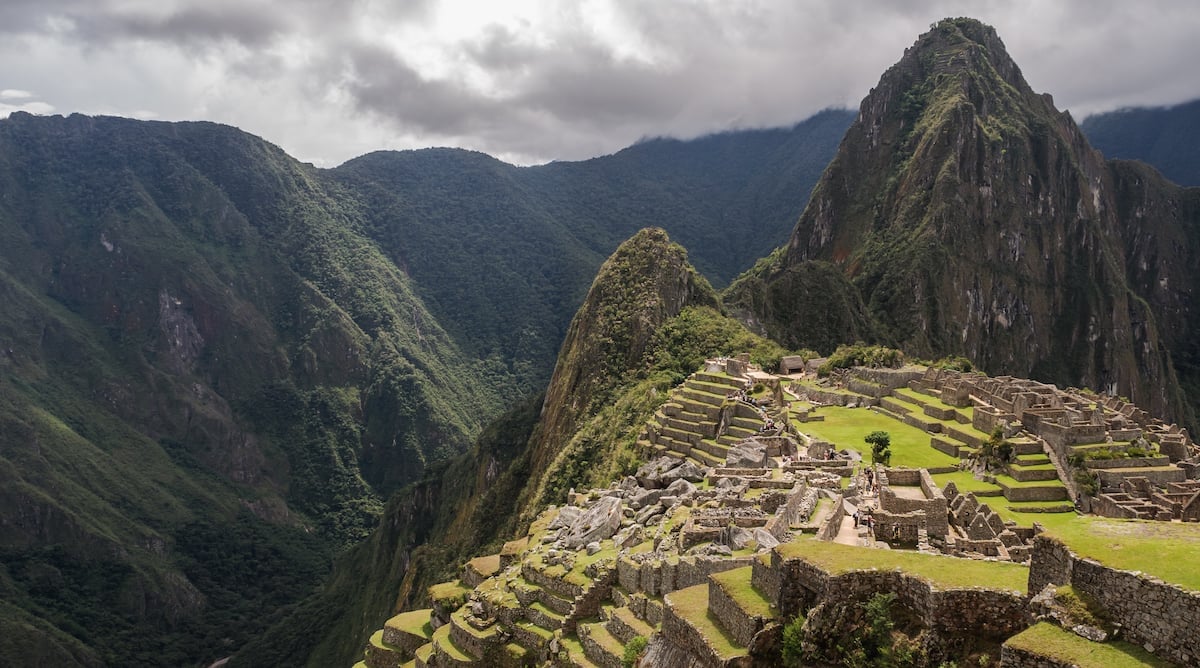
Is it really a trip to Peru if you don’t plan a visit to Machu Picchu? A land of ancient ruins that commemorate incredible human ingenuity, Machu Picchu is truly one of the natural wonders of Peru. If it’s not on your travel list, make sure you add it-and if it is, here are a few of our favorite things about the region to help you figure out what to do in Machu Picchu.
The Machu Picchu Sanctuary
When you’re wondering what to do in Machu Picchu, you should first be aware that Machu Picchu refers to the ancient Incan ruins, not the entire region surrounding it. That’s why we recommend exploring the entire Machu Picchu Sanctuary, a large UNESCO World Heritage Site encompassing all the other highlights on this list. Home to a wide variety of native animals like pumas and cock-of-the-rock birds, the sanctuary is full of unique and beautiful sights you won’t want to miss.
The Sun Gate
Not all the natural wonders of Peru have a ceremonial entrance, but Machu Picchu does. Standing on a ridge overlooking the entire Machu Picchu site, the Sun Gate offers panoramic views of the entire area. And while the gate itself may be manmade, the natural wonder you’ll want to see there is the majestic sight of the sun rising over all the Machu Picchu Sanctuary’s beauty.
The Cloud Forest
If you’re interested in what to do in Machu Picchu beyond the ruins, check out the Cloud Forest. A one-of-a-kind ecosystem, the Cloud Forest gets its name from an ever-present mist and features short, stocky trees that lend the terrain a mystical, labyrinthine atmosphere. It’s also home to wildlife not seen anywhere else, from the colored quetzals to the amphibious life that has adapted to cool environment. Put simply, the Cloud Forest is one of the must-see natural wonders of Peru.
Protect Your Machu Picchu Trip with Travel Insurance
When traveling to Machu Picchu, you should be able to stay in the moment and absorb the grandeur of this historical and natural wonder-not worry about obstacles that could arise on your trip. That’s why you should consider buying travel insurance for Machu Picchu after you book your trip.
If you don’t know how to get a travel insurance policy that fits your needs, one of the best methods is comparing plans on InsureMyTrip.com. As the world’s first travel insurance comparison site, we are an unbiased resource that empowers you to see coverage options from top providers that may be able to protect you financially in the event of delayed flights, lost or damaged luggage, needs for medical attention, and more. With a dedicated Customer Care team of licensed travel insurance agents, we can also answer your coverage-related questions, like how to decide what travel insurance for Machu Picchu is right for you.
U.S. / Peru Embassy and Consulate Locations
U.S. Embassy in Peru
U.S. Embassy Lima
Avenida La Encalada cdra. 17 s/n
Surco, Lima 33, Peru
Phone: 51.1.618.2000
Peruvian Embassy and Consulate in USA
Washington DC – Embassy of Peru
1700 Massachusetts Ave., N.W.
Washington DC 20036 United States
Phone: 1.202.833.9860
Los Angeles, California – Consulate General of Peru
3450 Wilshire Boulevard, Suites 800 y 830
Los Angeles, CA 90010 United States
Phone: 1.213.252.5910
San Francisco, California – Consulate General of Peru
870 Market St, Suite 1075
San Francisco, CA 94102 United States
Phone: 1.415.362.5185
Denver, Colorado – Consulate General of Peru
6795 E Tennessee Ave, Ste 550
Denver, CO 80224 United States
Phone: 1.303.355.8555
Hartford, Connecticut – Consulate General of Peru
19 High Street
Hartford, CT 06103 United States
Phone: 1.860.548.0266
Miami, Florida – Consulado General del Perú
1401 Ponce de Leon Blvd
Coral Gables, FL 33134 United States
Phone: 1.305.926.0844, 1.305.926.3870, 1.305.926.5247
Atlanta, Georgia – Consulate General of Peru
4360 Chamblee Dunwoody Rd, Suite 580
Atlanta, GA 30341 United States
Phone: 1.678.336.7010
Chicago, Illinois – Consulate General of Peru
180 N Michigan Ave, Ste 401
Chicago, IL 60601 United States
Phone: 1.312.782.1599
Boston, Massachusetts – Consulate General of Peru
20 Park Plaza, Suite 511
Boston, MA 02116 United States
Phone: 1.617.338.2190
New York, New York – Consulate General of Peru
241 E 49th St
New York, NY 10017 United States
Phone: 1.646.503.6932
Dallas, Texas – Consulate General of Peru
13601 Preston Rd. Suite E-650
Dallas, TX 75240 United States
Phone: 1.972.234.0005
Houston, Texas – Consulate General of Peru
5177 Richmond Avenue, Suite 695
Houston, TX 77056 United States
Phone: 1.713.355.9517
Disclaimer: The information contained in this article serves as a general overview of benefits and should only be used for informational purposes. Refer to your individual certificate of insurance for specific coverages, exclusions and benefits. When in doubt, please contact one of our licensed agents for additional assistance.
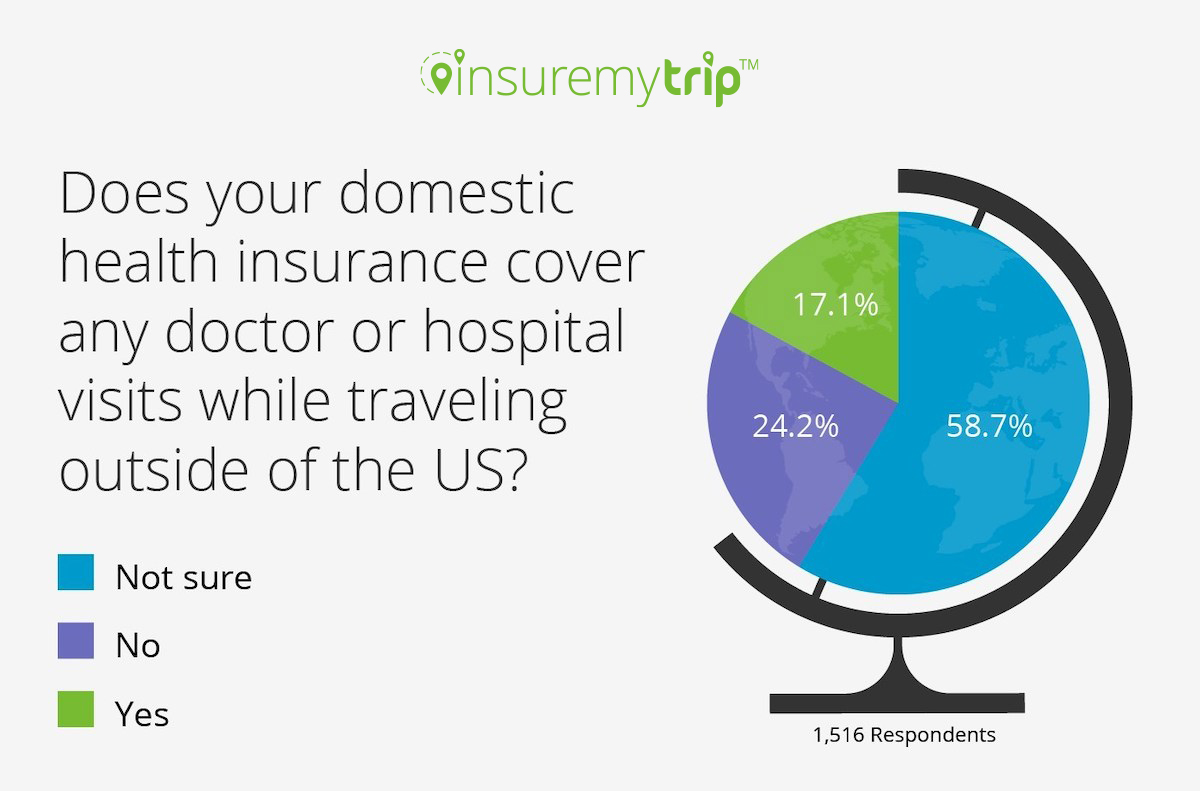
WARWICK, R.I., May 1, 2019 — An alarming number of Americans are unclear whether their health insurance works outside the U.S., according to a new survey from InsureMyTrip. Over fifty-eight percent polled were not sure whether their domestic health insurance plan would cover any emergency doctor or hospital visits while traveling outside the country.
Twenty-four percent said their domestic health insurance would offer no coverage, while the rest believed their insurance plan would offer coverage.
An alarming number of Americans are unclear whether their health insurance works outside the U.S., according to a new survey from InsureMyTrip. The survey was sent to those identified as Americans, male or female (18+), who use websites in the Google Surveys Publisher Network. The survey was conducted from April 25, 2019 – April 27, 2019, and generated 1,516 completed responses.
Survey Question:
Does your domestic health insurance cover any doctor or hospital visits while traveling outside the U.S.?
Survey Results:
Yes: 17.1%
No: 24.2%
Not Sure: 58.7%
Understanding Coverage
Travelers unclear on whether they have coverage should contact their health insurance company on whether emergency medical coverage will extend outside the U.S. Depending on your specific plan and area of travel, medical coverage can vary widely.
Policyholders may discover they have either “in-network” coverage, limited coverage, or no coverage at all. Travelers should also be aware of the following:
Deductibles: the amount a patient must pay for covered services before insurance kicks in Co-insurance: the amount a patient is responsible for a covered health care service Co-payments: a set amount owed for a covered health care service
A Word About Medicare
Original Medicare does not cover emergency medical care for travelers outside the U.S. There are supplemental plans such as Medicare Advantage and Medigap that can provide limited additional coverage, for more details visit Medicare.gov.
Emergency Medical Evacuations
According to the U.S. State Department, very few domestic health insurance companies will pay for a medical evacuation back to the United States, which can easily cost up to $100,000, or even more, depending on the condition and location of the patient.
Travel Insurance Options
Travelers should know about any limitations of domestic health insurance policies while out of the country. In most cases, there are gaps in coverage. Some gaps are significant. Travel insurance is recommended because it can act as supplemental or primary coverage.
Most travel insurance providers offer one or two different types of insurance plans that provide emergency medical coverage outside the U.S.:
Comprehensive travel insurance — offers the most protection for travelers. It provides a variety of benefits including trip cancellation, trip interruption, emergency medical coverage, emergency medical evacuation, 24/7 emergency assistance, and baggage protection.
Example: For a $5,000 two week vacation to Aruba, a comprehensive travel insurance plan will cost a couple in their 50s around $200. This includes a $50,000 emergency medical limit, $250,000 for emergency medical evacuation in addition to trip cancellation coverage and other benefits.
Travel medical insurance — provides emergency medical coverage, emergency medical evacuation coverage, and 24/7 emergency assistance. Trip cancellation is typically not included.
Example: For the same trip to Aruba, a travel medical insurance plan will cost a couple in their 50s around $80. This includes a $50,000 medical limit with a $250 deductible and $500,000 medical evacuation.
How It Helps
Both comprehensive and travel medical insurance plans are a valued supplement while traveling overseas, offsetting possible coverage gaps evident in some domestic health insurance plans including:
Emergency medical care: when a traveler requires a doctor or hospital visit when traveling abroad.
Emergency evacuation: when the attending physician requests that the traveler be transported to a more adequate medical facility or back home for further care.
24/7 emergency assistance: when a traveler needs help with a medical issues, needs to find a doctor or hospital or requires translation services.
Some travel insurance policies may also cover pre-existing medical conditions. To learn more about eligibility requirements, visit the learn section on InsureMyTrip.com.
Travel Smart
In addition to seeking proper medical protection, travelers can also reduce health risks by learning about destination-specific medical concerns, including required vaccinations. The U.S. State Department is a helpful resource.
It’s simple. InsureMyTrip finds you the right travel insurance plan, every time. InsureMyTrip is the authority on travel insurance. We are committed to empowering travelers to make the best possible insurance decisions by leveraging our technology, data intelligence, and expertise.