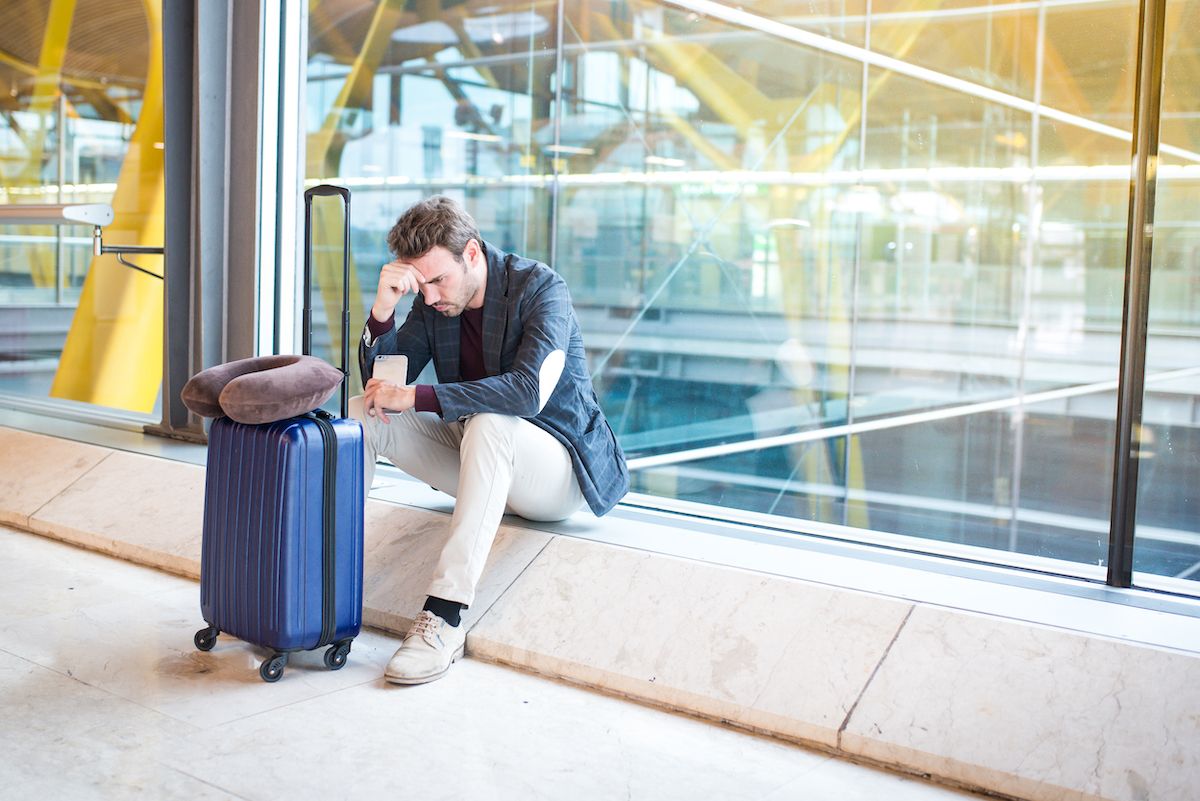
WARWICK, R.I., Sept. 23, 2019 — Monday, British tour operator Thomas Cook came to a halt, stranding thousands of passengers worldwide. In response, InsureMyTrip is urging passengers affected by the collapse to review their travel insurance policy for possible coverage. U.S.-based policyholders may be eligible for trip cancellation and trip interruption benefits if they obtained a plan with financial default coverage and met requirements.
“When an airline stops business operations abruptly, this can be very stressful for passengers left in limbo,” says InsureMyTrip Product Analyst Meghan Walch. “InsureMyTrip travel insurance agents are ready to provide support for those affected by the collapse. While it will take some time for Thomas Cook passengers to find alternate arrangements, those who purchased travel insurance may have coverage.”
Financial Default Coverage
Most comprehensive travel insurance plans available on InsureMyTrip do include financial default coverage. This coverage aims to help in the event a trip is canceled or interrupted due to an airline or tour operator halting operations, due to financial reasons.
When an airline or tour operator is in financial default, the company ceases to provide any service and halts all operations with no hope of repairing the financial damage.
In order to qualify for this coverage, travelers must meet eligibility requirements, including:
Requirements:
In most cases, must purchase within 10-21 days of making an initial trip payment
Travel supplier must be eligible for coverage
Required waiting period must be met (typically 10-14 days after the effective date) for the benefit to go into effect
Tip: Travelers should consider purchasing a travel insurance plan with financial default coverage included, since it is not available on travel protection plans offered directly by the airline or tour operator.
Filing A Claim
Policyholders may use the 24/7 emergency assistance hotline offered by their travel insurance company for possible support with rebooking flights and/or travel arrangements. In addition, affected policyholders may contact the claims department.
Travelers interested in learning more about financial default coverage can visit www.InsureMyTrip.com or call 1-800-551-4635 to speak with a licensed travel insurance agent.
It’s simple. InsureMyTrip finds you the right travel insurance plan, every time. InsureMyTrip is the authority on travel insurance. We are committed to empowering travelers to make the best possible insurance decisions by leveraging our technology, data intelligence, and expertise.
The way travelers communicate has changed over the years. Social media is an easy-to-use tool that can be quite powerful, particularly when discussing a user’s viewpoint or experience. Because of this, tracking the data around particular companies or brands is simple when using social media listening tools. Twitter is an extensive resource of customer opinions and satisfaction.
Using sentiment analysis, which uses artificial intelligence to detect the emotional tone of tweets, we identified which airlines received the most negative mentions.
In 2019, we monitored over 96,000 tweets mentioning the nine largest U.S. airlines over a two-week period. In 2021, we analyzed an additional 25,000 tweets to observe how the COVID-19 pandemic had affected rankings. For 2022 we revisited this topic and reviewed 3928 tweets to monitor the current U.S. Airline landscape and compare these results to previous observations.
For 2022 Allegiant Air was missed off the data as the tweets which were pulled out related to the Allegiant stadium, not the airline.
U.S. Airline Twitter Sentiment Analysis
Airline
% Positive
Southwest Airlines
70%
Allegiant Air
64%
Alaska Airlines
62%
Delta Air Lines
51%
JetBlue Airways
51%
United Airlines
51%
American Airlines
44%
Frontier Airlines
36%
Spirit Airlines
31%
Airline
% Negative
% Positive
Southwest Airlines
30%
70%
Allegiant Air
36%
64%
Alaska Airlines
38%
62%
Delta Air Lines
49%
51%
JetBlue Airways
50%
51%
United Airlines
50%
51%
American Airlines
56%
44%
Frontier Airlines
64%
36%
Spirit Airlines
69%
31%
Southwest Airlines came out on top with 69.9% of their mentions being positive, closely followed by Allegiant Air with 64.40%, Spirit Airlines worryingly received over 69% negative mentions.
We wanted to find out exactly what was causing these negative mentions for each airline. For our research we targeted stereotypical complaints put forth by customers including delays, cancellations, poor customer service, lost luggage, uncomfortable seats and bad food. This gave us an idea of what bad experiences could be expected by each airline and what each airline needs to consider a priority concern.
Airline
% Positive
% Change Positive From 2019
Spirit Airlines
21%
-10%
Frontier Airlines
24%
-13%
American Airlines
27%
-17%
United Airlines
32%
-19%
Alaska Airlines
43%
-19%
Delta Air Lines
30%
-21%
JetBlue Airways
25%
-25%
Southwest Airlines
32%
-38%
Allegiant Air
26%
-38%
Hawaiian Air
36%
–
Airline
% Negative
% Change Negative From 2019
% Positive
% Change Positive From 2019
Spirit Airlines
59%
-10%
21%
-10%
Frontier Airlines
59%
-5%
24%
-13%
American Airlines
53%
-3%
27%
-17%
United Airlines
42%
-7%
32%
-19%
Alaska Airlines
32%
-6%
43%
-19%
Delta Air Lines
45%
-4%
30%
-21%
JetBlue Airways
52%
3%
25%
-25%
Southwest Airlines
45%
15%
32%
-38%
Allegiant Air
53%
18%
26%
-38%
Hawaiian Air
34%
–
36%
–
Alaska Airlines had the highest positive rating with 42.76% of their mentions being positive in tone. However, the pandemic has taken a toll, as our 2019 calculation showed 62.1% of their Twitter mentions as positive.
It should be noted that, since the start of the pandemic, all airlines have had a significant reduction in the number of positive mentions and some a large increase in negative mentions.
Southwest Airlines, who came out on top in 2019 with 69.9% positive mentions, had just 32% of mentions as positive.
Spirit Airlines, who had previously received over 69% negative mentions, have managed to reduce their share of negative mentions to 58.55%. But this is still the second highest overall.
The most negatively tweeted airline in the pandemic was Frontier Airlines with 58.94% negative mentions.
We wanted to find out exactly what was causing these negative mentions for each airline. Our research targeted common complaints put forth by customers including delays, cancellations, poor customer service, lost luggage, uncomfortable seats and bad food. This gave us an idea of what negative experiences could be expected by each airline and what each airline may want to consider as a priority to address moving forward.
We also added common complaints specifically associated with flying during the COVID-19 pandemic including masks, COVID-19 testing requirements, social distancing and mandatory paperwork to fill out.
Airline
% Positive
% Change Positive From 2021
United Airlines
26%
-6%
Spirit Airlines
14%
-7%
American Airlines
19%
-8%
Frontier Airlines
13%
-11%
JetBlue Airways
14%
-11%
Delta Air Lines
17%
-13%
HawaiianAir
23%
-13%
Alaska Airlines
29%
-14%
Southwest Airlines
18%
-14%
Airline
% Negative
% Change Negative From 2021
% Positive
% Change Positive From 2021
United Airlines
37%
-5%
26%
-6%
Spirit Airlines
59%
0%
14%
-7%
American Airlines
59%
7%
19%
-8%
Frontier Airlines
61%
3%
13%
-11%
JetBlue Airways
52%
0%
14%
-11%
Delta Air Lines
52%
7%
17%
-13%
HawaiianAir
43%
9%
23%
-13%
Alaska Airlines
51%
20%
29%
-14%
Southwest Airlines
49%
4%
18%
-14%
Once again Alaska Airlines has the highest percentage of positive rating, with 29% of their mentions being positive in tone. However, this rating has decreased by 14% in comparison to 2021.
For context, we observed that all airlines have significantly decreased the number of positive mentions across the platform.
Southwest Airlines endured a 14% drop in positive mentions. Similarly, Hawaiian Airlines suffered a 13% decrease, falling from 35.6% to 23%.
United Airlines demonstrated the only reduction in negative mentions, improving their return by 5%. They currently hold the lowest number of negative mentions with 37%.
The most negatively tweeted airline during 2022 was Frontier Airlines with 61% negative mentions.
We set out to identify what caused these negative mentions for each airline. Our research targeted common complaints put forth by customers including delays, cancellations, poor customer service, and lost luggage. This provided us with an idea of what negative experiences may occur across the selection of airlines, as well as highlighting aspects airlines could reference for improvement in the future.
The Top Concerns While Flying By Airline
Airline
Delay
United Airlines
24%
JetBlue Airways
23%
Allegiant Air
21%
Delta Air Lines
19%
Frontier Airlines
19%
Spirit Airlines
17%
Alaska Airlines
16%
Soutwest Airlines
16%
American Airlines
14%
Airline
Delay
Cancel
Customer Service
Luggage
Money
Seats
Food
Soutwest Airlines
16%
11%
5%
2%
16%
16%
3%
Alaska Airlines
16%
8%
5%
3%
1%
2%
2%
Allegiant Air
21%
6%
7%
1%
3%
1%
1%
JetBlue Airways
23%
7%
4%
1%
2%
2%
1%
Delta Air Lines
19%
9%
6%
2%
1%
1%
1%
Frontier Airlines
19%
13%
9%
2%
2%
1%
1%
Spirit Airlines
17%
19%
7%
2%
4%
1%
1%
American Airlines
14%
10%
7%
2%
3%
3%
1%
United Airlines
24%
11%
7%
2%
2%
2%
0%
United Airlines had the highest proportion of negative tweets (23.58%) that related to delays, while 11.15% were about cancellations, a combined total of 34.73% for these two categories.
While every airline experiences delays and cancellations due to factors out of their control, it seems United Airlines and Spirit Airlines are particularly substandard in the way they handle customers in these situations.
Interestingly, Southwest Airlines (who received the least negative mentions overall) see their biggest complaint is about money, while the rest of the airlines have limited complaints about this. Furthermore, Southwest Airlines received the highest proportion of negative mentions for keywords regarding seating (15.7%), which may be due to their policy on not assigning seats.
To conclude, while we cannot infer that this means one airline has more issues than another, it certainly gives us an idea of what each airline struggles with the most.
By understanding what each airline struggles with we can manage our own expectations of each airline. If you are looking to prioritize customer service for example, it is logical to expect Frontier Airlines may struggle with providing quality customer service, but it is likely their seating is comfortable, and food is satisfactory. Knowing this prior to flying with Frontier will likely improve the overall experience as there is little to no expectation of quality customer care. Alternatively, if you are looking to experience high quality care it would be wise to avoid this airline entirely.
Overall if you are looking for a hassle-free experience, Southwest Airlines are the most likely to bring you this based on social media reaction. On the other hand, flying with Spirit Airlines may lead to a negative experience in some form.
*Data collected from Brand24
Airline
Delay
Spirit Airlines
12%
Frontier Airlines
10%
American Airlines
9%
Unitied Airlines
8%
JetBlue Airways
7%
Delta Air Lines
7%
Alaska Airlines
7%
Allegiant Air
4%
Southwest Airlines
3%
Hawaiian Air
2%
Airline
Delay
Cancel
Customer Service
Luggage
COVID-19 Testing
Masks
Refunds
Unitied Airlines
8%
10%
5%
1%
0%
0%
3%
American Airlines
9%
10%
6%
1%
0%
1%
3%
Alaska Airlines
7%
7%
5%
1%
0%
1%
3%
Allegiant Air
4%
6%
5%
3%
0%
1%
2%
Delta Air Lines
7%
6%
8%
1%
0%
0%
0%
Frontier Airlines
10%
7%
4%
1%
0%
0%
0%
Southwest Airlines
3%
2%
4%
0%
0%
1%
0%
JetBlue Airways
7%
5%
1%
1%
0%
3%
0%
Hawaiian Air
2%
1%
2%
0%
0%
1%
0%
Spirit Airlines
12%
9%
5%
1%
1%
0%
0%
Spirit Airlines had the highest percentage of negative tweets (12.05%) related to delays. However, this is a reduction from 2019, where they previously had 16.69% of their negative tweets about delays.
Interestingly, complaints relating to COVID-19 specifically were very low across all airlines. This indicates that, overall, all airlines seem to be upholding their new protocols relatively well. JetBlue had the highest share of complaints around Personal Protective Equipment (PPE) and mask protocols (3.26%). However, these still represent a significantly low number of complaints overall. The majority of complaints for JetBlue were associated with delays (6.83%) and cancellations (5.43%).
Airline
Delay
Frontier Airlines
14%
American Airlines
11%
JetBlue Airways
11%
Southwest Airlines
11%
Spirit Airlines
10%
Delta Air Lines
6%
Alaska Airlines
5%
United Airlines
5%
HawaiianAir
3%
Airline
Delay
Cancel
Customer Service
Luggage
Money
Flight Attendant
Southwest Airlines
11%
3%
4%
7%
8%
6%
United Airlines
5%
5%
2%
1%
5%
6%
Alaska Airlines
5%
5%
7%
5%
3%
5%
JetBlue Airways
11%
11%
6%
1%
7%
5%
American Airlines
11%
4%
7%
2%
8%
4%
Delta Air Lines
6%
5%
3%
6%
10%
3%
Frontier Airlines
14%
16%
6%
1%
20%
2%
Spirit Airlines
10%
5%
9%
5%
14%
2%
HawaiianAir
3%
7%
3%
4%
5%
1%
Frontier Airlines represented the highest percentage of negative tweets (14%) regarding delays. This is a vast increase in comparison to their 2021 data (9.53%).
Southwest Airlines received a substantial 7% of their negative tweets regarding luggage. In 2021 they only received 0.05%, the lowest of all Airlines observed.
Spirit Airlines notably increased to 9% in negative tweets concerning their customer service, demonstrating a 4.2% growth from 2021.
The Top Concerns While Flying Overall
Concern
Percentage of Tweets
Cancelations
7%
Delays
7%
Customer Service
5%
Refunds
3%
General COVID-19 Concerns
1%
Masks
1%
Luggage
1%
Hidden Charges/Costs
1%
Tests
0%
Cleanliness
0%
Covid-19 Forms
0%
Social Distancing
0%
Across all airlines, cancellations and delays remain to be the most popular complaints in the COVID-19 era. Beyond general COVID-19 related concerns (any complaint that included the word ‘covid’ within it), masks were the biggest complaint related to the coronavirus.
Overall, however, COVID-19 concerns were significantly low, indicating that travelers had confidence in their safety when flying either domestically or internationally.
To conclude, while we cannot use this data to presume that one airline has more shortcomings than another, it certainly gives us an idea of possible opportunities for improvement. Understanding what each airline struggles with may help travelers manage their expectations of the experience each airline provides.
A key takeaway from our research is that while all airlines may be getting an increase in criticism across social media overall, the number of complaints related to COVID-19 protocols are actually very low.
For travelers looking for a hassle-free experience, Alaska Airlines may be the most likely to provide this, based solely on social media temperament at the time of publication. Other high performing airlines include Hawaiian Airlines and 2019’s winner Southwest Airlines. Travelers may also want to consider the high number of complaints regarding experiences with Frontier and Spirit Airlines as there may be some room for improvement with these services.
*Data collected from Brand24
Concern
Percentage of Tweets
Money
5%
Delay
4%
Cancel
3%
Customer service
3%
Luggage
2%
Flight Attendant
1%
Money-related complaints represent 5% of all negative tweets across airlines, rising above all. Delays and cancellations remain among the most mentioned in negative tones, however, both have improved substantially.
To conclude, while we cannot use this data to presume that one airline has more shortcomings than another, it certainly gives us an idea of possible opportunities for improvement. Understanding where each airline may struggle can help travelers manage their expectations of the experience of each airline.
A key takeaway from our research is that while negative feedback on social media remains consistent across all airlines, the number of complaints has decreased significantly in comparison to 2021.
For travelers seeking a smooth experience, Hawaiian Air appears to have the lowest number of complaints across social media at the time of publication. 2021 winner Alaska Airlines remains an honorable mention.
Alternatively, travelers should acknowledge the high number of complaints recorded by Frontier Airlines and Spirit Airlines as there may be room for improvement within their services based on customer feedback.
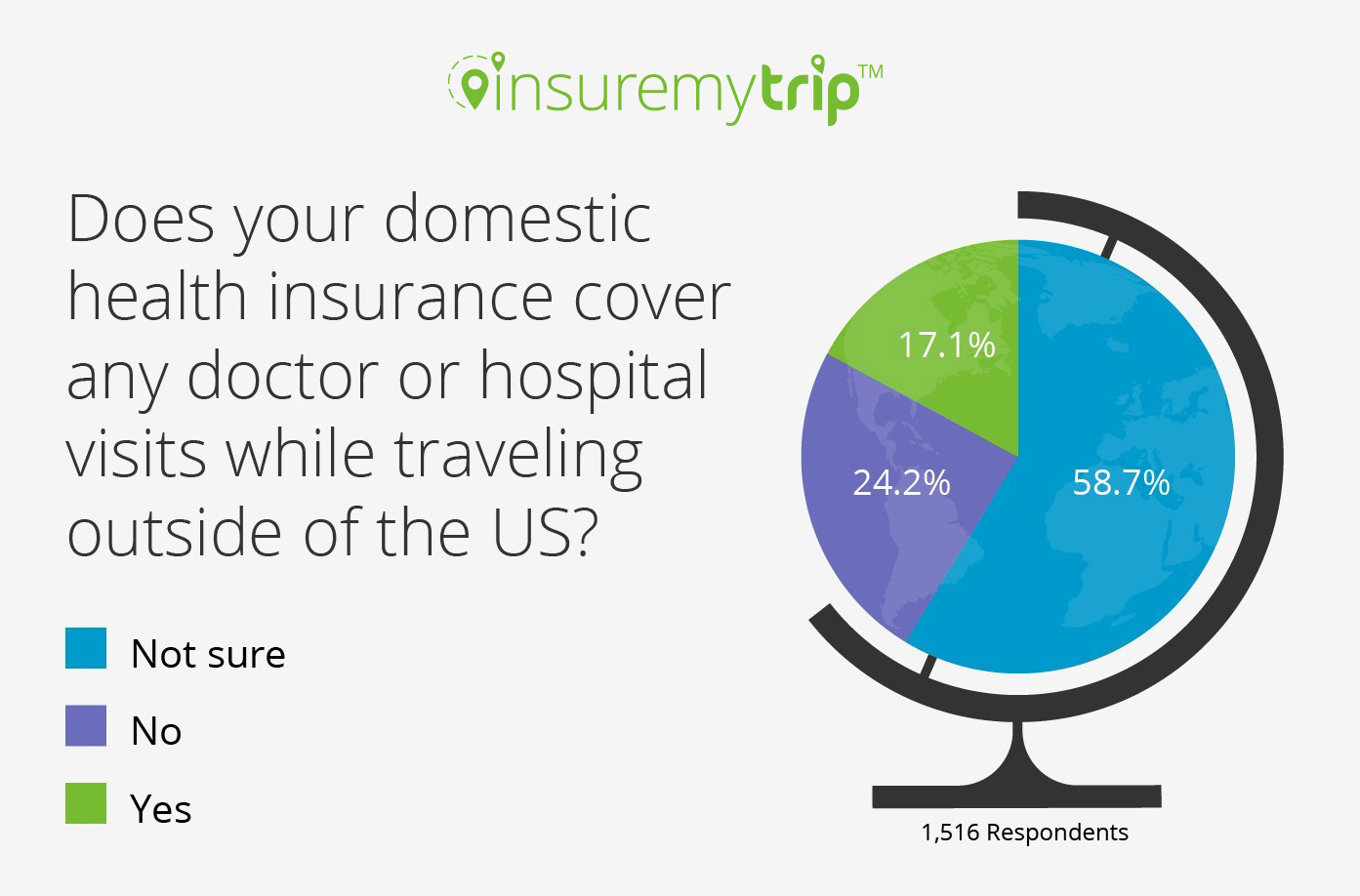
WARWICK, R.I., Sept. 17, 2019 — Today, InsureMyTrip launched an educational initiative to raise awareness over the importance of obtaining proper emergency medical coverage for Americans traveling abroad. This latest initiative comes on the heels of a new InsureMyTrip survey that suggests roughly three out of five Americans are unclear whether their domestic health insurance covers any doctor or hospital visits abroad – Original Medicare does not offer coverage outside the U.S.
Summary:
Poll reveals that most Americans are unclear whether domestic health insurance covers any doctor or hospital visits abroad
Generally, Original Medicare does not cover medical costs outside of the U.S.
The U.S. State Department encourages travelers to purchase travel insurance with emergency medical and emergency medical evacuation coverage
An alarming number of Americans are unclear whether their health insurance works outside the U.S., according to a new survey from InsureMyTrip. The survey was sent to those identified as Americans, male or female (18+), who use websites in the Google Surveys Publisher Network. The survey was conducted from April 25, 2019 – April 27, 2019, and generated 1,516 completed responses.
“Our latest poll indicates that more education is needed on this important topic. Our goal is to inform travelers, in particular, older Americans, on travel insurance options that include emergency medical and emergency medical evacuation coverage,” says InsureMyTrip Travel Insurance Product Expert Meghan Walch.
Medicare Limitations
Original Medicare does not cover emergency medical care for travelers outside the U.S. There are supplemental plans such as Medicare Advantage and Medigap that can provide limited additional coverage, for more details visit Medicare.gov.
To better assist travelers with understanding their options, InsureMyTrip has expanded its Medicare educational resources to include access to a free Medicare ebook, videos, and other resources. In addition, InsureMyTrip experts offer tips for choosing the right travel insurance plan to fill in any coverage gaps.
Emergency Medical Evacuations
According to the U.S. State Department, very few domestic health insurance companies will pay for a medical evacuation back to the United States, which can easily cost up to $100,000, or even more, depending on the condition and location of the patient.
It’s simple. InsureMyTrip finds you the right travel insurance plan, every time. InsureMyTrip is the authority on travel insurance. We are committed to empowering travelers to make the best possible insurance decisions by leveraging our technology, data intelligence, and expertise. InsureMyTrip is rated A+ by the Better Business Bureau.
WARWICK, R.I., Sept. 12, 2019 — Today, InsureMyTrip, an unbiased travel insurance resource for millions of travelers, is proud to announce the launch of Tips & Trips, an educational podcast. The podcast, available on popular hosting platforms, aims to empower travelers with thoughtful insight. Beginning this week, listeners can tune in to hear in-depth interviews with representatives from the American Red Cross, AARP, InsureMyTrip and many others.
The Tips & Trips Podcast takes a refreshing approach to discuss the latest travel news and information with insight from inspiring guests. Each episode offers listeners a chance to learn from an industry expert on a wide range of travel topics – including how to plan a successful trip and how world events may affect travelers. Host Zartman also dedicated a few episodes to talking specifically about weather events and travel behaviors.
“People value experiences over material items more than ever, and it has changed the way we travel,” says Podcast Host Abbey Zartman. “As travel behavior continues to evolve, our goal is to better understand that experience, and become a go-to guide.”
Listeners can stream the episodes on iTunes, Spotify, and more. Viewers will also soon be able to watch video clips of each episode on InsureMyTrip’s rapidly expanding social media platforms.
Tips & Trips Podcast Reviews:
Interesting episode! I learned a lot about weather and how it can affect travel plans. The host has a very calming voice and was able to keep to conversation engaging. The guest was able to present data in a way that was easy for me to understand. I’m looking forward to future episodes!
Very informative, a great listen. The first episode was fantastic. There was a ton of information compacted into an easily digestible time frame and I learned quite a bit. The host makes the conversation flow so well and they made me think about travel in a way I hadn’t before! Worth the listen, you’ll learn a lot!
About Tips & Trips Podcast
A podcast guide for travel tips on the fly. Each episode we’ll explore different tips with local guides, cover travel world news with experts, and answer all of your travel questions along the way.
It’s simple. InsureMyTrip finds you the right travel insurance plan, every time. InsureMyTrip is the authority on travel insurance. We are committed to empowering travelers to make the best possible insurance decisions by leveraging our technology, data intelligence, and expertise. InsureMyTrip is rated A+ by the Better Business Bureau.
“Bermuda, Bahama, come on pretty mama…” It’s no surprise the 1988 Beach Boys hit “Kokomo” features the Bahamas so prominently. Even today, the island getaway remains one of the most popular vacation destinations among travelers.
In light of recent hurricane activity in the area and COVID-19 pandemic, our customers are increasingly asking if travel insurance is required for trips to the Bahamas. Recently, the country removed the travel health insurance requirement for incoming visitors. While insurance is no longer mandatory for travelers, we highly recommend purchasing travel insurance coverage for health-related expenses, as well as travel delays, baggage loss, and other travel mishaps.
Concerns about illness, injuries, and medical issues have historically been the top reasons those traveling to the Bahamas ask about insurance. However, the destruction caused by Hurricane Dorian has changed the way people are thinking about coverage for the islands. Weather is now the number one concern driving Bahamas trip insurance inquiries. Unforeseen weather events can wreak havoc on travel plans by causing delays, cancellations, and even total destruction of your accommodations in some cases. Choosing an insurance plan that will cover these types of events is your best defense.
As mentioned above, many travelers to the Bahamas buy coverage to supplement or replace their domestic health insurance while they’re away. Most domestic health insurance providers do not provide coverage while you are out of the country. For this reason, those taking a trip to the Bahamas frequently purchase travel medical plans. This way, they can stay protected against hefty out-of-pocket costs as a result of unforeseen illnesses or injuries.
While healthcare and weather concerns are the main reasons travelers purchase trip insurance for the Bahamas, there are additional reasons worth considering. For example, the Bahamas is a popular destination among cruisers, so you might consider choosing a plan that incorporates cruise coverage if you plan to set sail. Other travelers may be flying internationally to reach the islands. In these cases, flight insurance can help travelers with unexpected issues, including delays, interruptions, and missed connections.
One of the most common questions we get from customers planning a visit to the Bahamas is “how much travel insurance will cost?” The cost of a Bahamas trip insurance plan varies due to several factors. First, the number of travelers in the group may affect the rate. In general, policies that cover more than one traveler have an increased cost. Second, traveler ages can play a role in determining pricing, as older travelers typically carry more risk as a result of medical concerns. This increased risk can translate to a higher cost, especially if one or more travelers in the group have any pre-existing conditions. Another important factor is the duration of your trip. Traveling for a longer period of time usually means there are more opportunities for travel hiccups. So, a plan that covers a week-long trip or vacation will be considerably cheaper than a plan that covers long-term travel. One of the most significant factors for determining the cost of travel insurance is the kind of coverage the plan offers. Typically, the price of a plan will increase for each coverage it includes.
Do I Need a Passport for the Bahamas?
Passports are required for nearly all travelers entering the Bahamas. In rare cases, passports are not required, and other documents can be substituted, but travelers are highly encouraged to secure a valid passport when visiting the Bahamas.
Although it is best practice to bring valid passports for every traveler when visiting the Bahamas, there are a few exceptions to the requirements. For example, if you are a U.S. citizen traveling to the island nation on a closed-loop cruise, meaning the cruise starts and ends at the same U.S. port, you may be able to use a driver’s license and birth certificate in lieu of a passport. Additionally, kids under the age of 16 may use a birth certificate, certificate of citizenship, or naturalization certificate, but only if they will be traveling to and from the Bahamas by sea. These exceptions will depend on the specific requirements of the cruise line. Be sure to check with your cruise company for the most accurate information. No matter which cruise company you choose, children and adults are both required to have a valid passport if they will be arriving to or leaving the country by air.
We strongly recommend securing a valid passport because, without one, you will not be able to fly back if a family or medical emergency requires you to leave unexpectedly. This is also true if you miss the boat at a particular port and need to fly to the next destination to reboard the cruise ship. For these reasons, it’s best practice to maintain valid passports for everyone in your travel party no matter your citizenship.
Do I Need a Visa for the Bahamas?
Tourist visas are not required for U.S. and Canadian citizens traveling to the Bahamas if the trip duration is less than 90 days. Business travelers and tourists who intend to stay longer than 90 days are advised to contact the closest Bahamas embassy or consulate to apply for a visa.
Non-citizens residing in the U.S. are not required to get a visa if the trip length is less than 30 days, but they will need to bring their Alien Registration Card (Green Card) and passport for entry. Non-citizen, permanent residents of Canada are not required to get a visa if the trip will last less than 90 days, but will need to travel with their Permanent Resident Card and valid passport from their country of origin.
Travel Tips & Safety for the Bahamas
Money & Currency Exchange
The Bahamian dollar (BSD) is the official currency of the Bahamas and exchanges at a 1:1 rate with the United States dollar (USD). Similarly, banknotes and coins are issued in many of the same denominations as USD, including $1, $2, $5, $10, $20, $50, and $100 bills as well as 1, 5, 25, and 50-cent pieces. There are also $1 and $20 Bahamian coins.
While the Bahamas issues its own paper notes and coins, U.S. dollars are also accepted at many restaurants, hotels, and stores. This is especially true in tourist hotspots, like cruise ports and resort destinations. There is no restriction on the amount of foreign currency that can be brought into the Bahamas, so bringing some cash with you is a great option since you’ll avoid exchange fees and have money for tipping. However, it’s a good idea to bring some other forms of payments too. This way, you can mitigate the risk of loss and theft.
Credit and debit cards offer another convenient way for travelers to access funds while visiting the Bahamas, but there are some considerations to make before you go. First, you’ll want to ask the issuing bank if your card’s PIN will work in the Bahamas, especially in the Out Islands. Some cards require four-digit PINs rather than six-digit PINs for overseas withdrawals. Similarly, these locations often require chipped cards to help thwart fraudulent activity. Additionally, you should check with your bank about any fees that may be imposed when making purchases or withdrawing money abroad. Fees for international transactions can really add up depending on how they are assessed. In some cases, your issuing bank will charge a fee on top of the fee charged by the bank who owns the ATM you’re using.
You should find out how accessible ATMs are in the areas you’ll be traveling to. For example, Paradise Island and New Providence Island have plenty of ATMs, but they can be harder to find on Grand Bahama Island, and there are very few ATMs located in the Out Islands. You should plan to bring some extra cash if you plan to travel to these more remote islands. Lastly, make sure to bring more than one card and that they are issued by different banks so you’ll have a backup plan in case one account is frozen.
Transportation
Like many island nations, the Bahamas is accessed by air or sea, but there are several options for getting around the islands once you’ve arrived. Transportation options include taxis, rental cars, and buses, as well as charter boats and planes. As a general rule, highly populated areas offer more modes of transportation.
Taxis
By far, the most popular mode of transportation in the Bahamas is the taxi. We encourage tourists to use only official taxis, which are easily identified by their colorful yellow license plates. Taxis are often found near hotels and airports for easy accessibility, but you can also call for a ride when you need to. In general, taxis are cash only so plan accordingly. Meter rates can vary somewhat but are regulated by law. Sometimes surcharges apply if there are more than two passengers or extra luggage.
Travel by Car
Renting a car can be a great option for those interested in taking the “road less traveled,” but keep in mind that UK driving rules apply in the Bahamas. This means you’ll need to drive on the left side of the road. You’ll also want to watch for roundabouts, which can be a bit startling for unprepared drivers. It’s a good idea to take a look at the local laws regarding the road before renting, especially if you’ll have small children who require car seats. For even more peace of mind, consider rental car insurance in case anything happens. Even if you don’t plan to rent a car, pedestrians should keep the traffic patterns in mind and look both ways before crossing the street.
Buses
Public transportation buses, referred to by locals as “jitneys,” are available on most of the major islands. This includes Paradise Island, New Providence Island, and Grand Bahama Island. The bus schedule typically runs from around 7:00 a.m. to 7:00 p.m. Jitney rates vary based on the route. Riders should note that exact change is usually required. Most jitney stops are clearly marked, so it’s easy to board in any of the service areas.
Boats & Charter Planes
If you’re looking to explore the Bahamian coastline and Out Islands, you’ll likely need to charter a boat. There are plenty of options and rates will vary based on boat size, number of passengers, and the route. Plane and helicopter tours are also available, although these options tend to be more expensive than boats. However you plan to tour the islands, the breathtaking views are sure to make for some fantastic vacation memories.
Culture
Like many nations in the Caribbean, the Bahamas has a laid-back culture that is both welcoming and hospitable. Bahamians are often described by tourists as easy-going, which is part of the reason the country remains a top travel destination. The population is diverse and is primarily comprised of descendants of indigenous people and British settlers, although the slow-paced “island life” has drawn transplants from all around the world in more recent years.
The nation’s proximity to the United States explains the many western values found throughout the culture. For example, Bahamians are deeply religious and primarily Christian, but the country’s constitution guarantees the freedom to celebrate any religion. Additionally, sports, art, music, and dance drive much of the country’s traditions and culture.
Speaking the Language
Another reason the Bahamas remains a popular destination among western tourists is the fact that the official language is English. This can make travel to the region much easier than some other destinations. Travelers shouldn’t expect typical American or British English, though. Instead, Bahamians have their own flavor of English. In fact, many people speak an English-based creole language referred to as “Bahamian dialect” sometimes called “Bahamianese” or simply “dialect.” The extent to which locals speak dialect is usually based on how the areas were settled and the subsequent populations living in those regions. It’s a good idea to brush up on some of the differences in pronunciation as well as colloquial terms that come up frequently. Overall, western travelers can expect that with some sharp listening skills and a little preparation, communication will not be a challenge.
Crime Risk & Traveler Safety
As is true for traveling to any destination, visitors to the Bahamas should exercise caution and employ general safety tips to avoid problems with theft, scams, and violence. Most travelers do not experience any issues when traveling in and around the Bahamas, but it’s a good idea to review any travel advisories for the areas you intend to visit before you go.
In general, you should do your best to avoid looking like a tourist, don’t answer your hotel room door unless you know who it is, and avoid carrying large amounts of cash or valuables on your person. In the unlikely event that you are targeted for theft, do not physically resist as this could make matters worse. If you have any doubts, consider a travel protection plan to recoup losses due to theft.
Foul weather is much more likely to affect your trip than crime, which was demonstrated recently by Hurricane Dorian and the damage the storm caused. The Bahamas lie in an area known as “Hurricane Alley,” so if you plan to travel to the country between the beginning of June and the end of November you should be aware that tropical storms and hurricane activity is much more likely. Make sure to plan ahead and keep an eye on weather patterns in the days leading up to your trip. This way you can make arrangements if the weather disrupts your plans.
Popular Destinations & Tourist Attractions in the Bahamas
The topography of the Bahamas is similar to many islands in the region in that the land is primarily low and flat. Even the country’s peak elevation is only about 200 feet high at Mt. Alvernia on Cat Island. As a result, tourists tend to gravitate toward the low-lying coastal areas and immaculate beaches. That said, the terrain also features lakes and mangrove swamps, which are home to unique wildlife and flora. Whether you plan to stay at a resort, explore the cities, or hang at the beach with the famous swimming pigs, you’re sure to find some great locations to do so. Every itinerary is different, but we’ve put together a list of popular tourist attractions and destinations so you can get started planning your perfect Bahamas trip.
Top 10 Travel Destinations in the Bahamas
Andros Island
Grand Bahama
Long Island
Bimini
Harbour Island & Eleuthera
Nassau
The Abacos
Atlantis Resort (Paradise Island)
Cat Island
Exuma Cays Land & Sea Park
U.S. / Bahamas Embassy and Consulate Locations
U.S. Embassy in The Bahamas
U.S. Embassy Nassau
42 Queen St.
Nassau, The Bahamas
Phone: 242.322.1181
Bahamas Embassy and Consulate in USA
Washington DC – Embassy of The Bahamas
2220 Massachusetts Ave, NW
Washington DC 20008 United States
Phone: 1.202.319.2660, 1.202.319.2667
Miami, Florida – Consulate General of The Bahamas
100 N. Biscayne Blvd, #900
Miami, FL 33132 United States
Phone: 1.305.373.6295
Atlanta, Georgia – Consulate General of The Bahamas
2970 Clairmont Road NE, Suite 290
Atlanta, GA 30329 United States
Phone: 1.404.214.0492
New York, New York – Consulate General of The Bahamas
231 East 46th Street
New York, NY 10017 United States
Phone: 1.212.421.6420
Disclaimer: The information contained in this article serves as a general overview of benefits and should only be used for informational purposes. Refer to your individual certificate of insurance for specific coverages, exclusions and benefits. When in doubt, please contact one of our licensed agents for additional assistance.
WARWICK, R.I., Sept. 4, 2019 — Hurricane Dorian, the strongest storm this year, has travelers scrambling to get out of its path, halt trips, or postpone upcoming travel plans. Today, hundreds of flights are already canceled in the Southeast U.S. with more expected as the storm nears. Due to the storm’s wrath, InsureMyTrip reports a 20 percent jump in call volume from travelers seeking guidance.
Travel Impact Summary:
The storm moves closer to Florida, Georgia, and the Carolinas
Charleston International Airport closes, Orlando International Airport set to reopen Wednesday
Some travelers forced to evacuate or wait out the storm until flights resume
Online searches related to hurricane coverage grew 8x since Dorian was named, call volume up (Source: InsureMyTrip)
Concern grows over popular tourist destinations, some travelers seek to cancel trips, file claims
Hurricane Travel Insurance Coverage Explained
Here are examples of how insurance may enable travelers to receive reimbursement of pre-paid, non-refundable trip costs if they must cancel a trip due to severe weather-related issues that are covered under the trip cancellation benefit:
Cancel trip due to weather: when common carriers such as airlines and cruise lines cease service due to weather. Many plans require that the cessation of services be for a certain number of hours, usually 24-48.
Cancel due to a hurricane warning: when a destination is under a NOAA-issued hurricane warning.*
Cancel because of storm damage at destination: when a hotel, resort, or vacation rental is devastated and made uninhabitable by a storm. InsureMyTrip is already receiving inquiries from travelers seeking to file claims due to canceled trips to the Bahamas.
Cancel because home is destroyed by storm: when the home of a traveler sustains destructive storm damage.
Cancel trip for any reason: this is an optional time-sensitive benefit available on some plans, that allows travelers to cancel a trip for any reason. Reimbursement is usually 50-75% of the pre-paid, non-refundable trip cost. This benefit includes specific eligibility requirements.
The 2019 Atlantic hurricane season lasts till November 30. Travelers concerned about hurricanes should purchase travel insurance early. Once a storm starts forming, it’s considered a foreseeable event and insurance coverage will no longer be available to cover losses related to that storm. Only a few plans offer coverage for a NOAA-issued hurricane warning.
According to data from InsureMyTrip, the 2017 hurricane season was the most destructive for American travelers. Hurricane Irma, Harvey, Maria and Nate drove online searches for travel insurance to its highest level in five years.
Travelers interested in learning more about protection plans for travel during hurricane season can visit www.InsureMyTrip.com or call 1-800-551-4635 to speak with a licensed travel insurance agent.
*With most comprehensive travel insurance plans, the NOAA-issued hurricane warning must be issued within 24-48 hours of your scheduled departure and the cancellation must be more than 14 days after your effective date for trip cancellation coverage when a destination is under a NOAA-issued hurricane warning.
About About Weather-Ready Nation
InsureMyTrip is part of the Weather-Ready Nation (WRN) Ambassador™ program, an initiative of the U.S. Department of Commerce, National Oceanic and Atmospheric Administration (NOAA), to strengthen partnerships with external organizations toward building community resilience in the face of increasing vulnerability to extreme weather and water events.
About InsureMyTrip
It’s simple. InsureMyTrip finds you the right travel insurance plan, every time. InsureMyTrip is the authority on travel insurance. We are committed to empowering travelers to make the best possible insurance decisions by leveraging our technology, data intelligence, and expertise. InsureMyTrip is rated A+ by the Better Business Bureau.