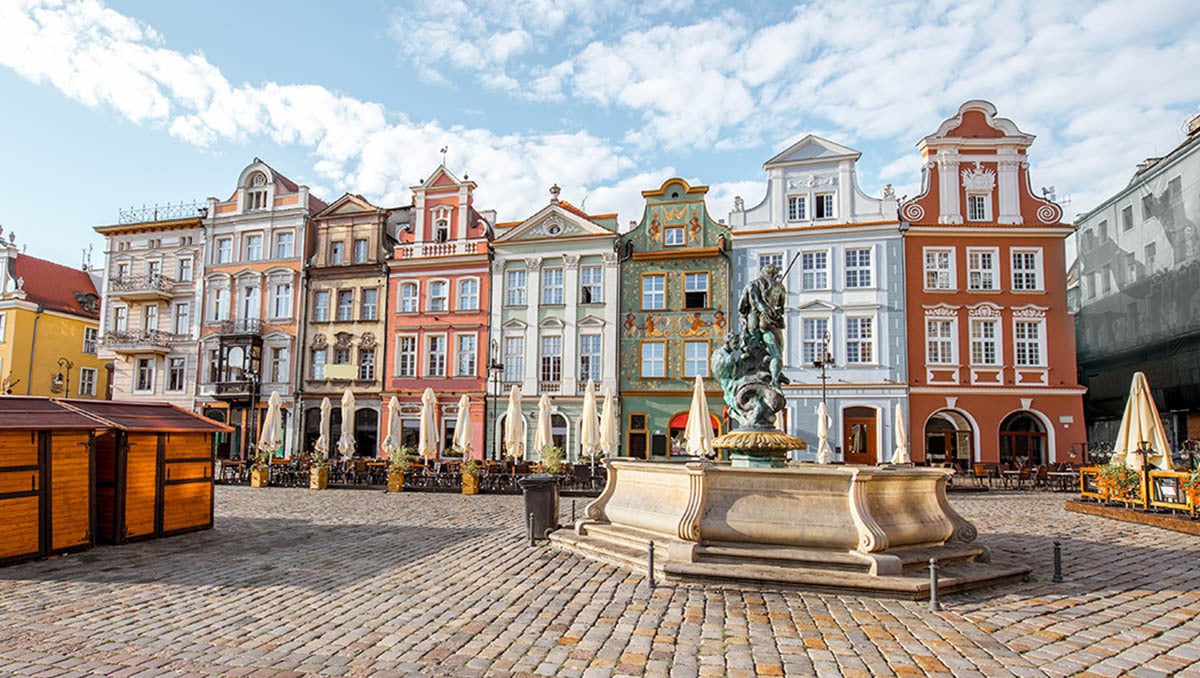
Poland is a scenic and traditional destination, frequented by travelers for tourism, school, and business trips alike. Those planning a trip to this historic country should be advised that travel insurance is mandatory for some visitors to Poland. While visitors from certain countries are required to have travel insurance for entry, coverage is highly recommended for all travelers. Travel insurance for Poland can help protect visitors from medical expenses and costs related to a variety of unforeseen travel mishaps.
An array of unique coverages may be offered, all designed to assist travelers when things go wrong overseas. Poland trip insurance may reimburse travelers for covered expenses and sometimes directly pay for certain necessities during a trip.
How Much Does Poland Travel Insurance Cost?
Travel insurance varies with the trip being covered, so each policy may be a little different. In general, several determining factors influence the overall price of travel insurance for Poland:
Size of the traveling party
Ages of travelers
Trip length
Type of coverage
Each of these factors helps providers gauge the risk associated with a trip to Poland. Typically, as risk involved with the trip increases, travel insurance prices may also increase.
For a more accurate representation of how your trip details might affect the cost of a plan, enter those details into the free custom travel insurance quote tool and review rates currently being offered for your desired coverages.
What Does Travel Health Insurance for Poland Cover?
Most travel medical plans cover emergency healthcare treatment, emergency medical evacuation, and hospital fees, but other coverages can vary plan-by-plan. Travelers may choose to incorporate certain coverages that pertain to their personal health concerns and Poland itinerary.
For example, travelers with a pre-existing medical condition may prioritize getting a waiver and coverage for treatment related to the condition while abroad. Travelers may also consider coverage like trip interruption, which can offer reimbursement to travelers who must leave Poland early due to an illness or injury.
Travel-related benefits, like those for lost baggage, flight delays, and more, can be purchased alongside travel health insurance for Poland in a comprehensive travel insurance plan. Comprehensive plans provide the greatest amount of coverage to travelers.
COVID-19 is a notable concern for many travelers to Poland. Some travel insurance companies may cover COVID-19 treatment, quarantine, and more, but not all providers pay for expenses related to the coronavirus. For eligible travelers, coverages like Cancel For Any Reason may offer assistance when canceling a trip due to COVID-19 or other reasons. Some benefits are time-sensitive or have certain requirements, so be sure to review the details of your coverages.
What is the Best Travel Insurance for Poland Trips?
Traveling abroad for work or pleasure can open the door to many troublesome situations, and international insurance for Poland should aim to give visitors peace of mind to experience their trip to the fullest.
Travel Tips & Safety for Poland
Money & Currency Exchange
Although a member of the European Union, Poland doesn’t use the Euro. The official currency of Poland is the Polish złoty (currency code: PLN). Similar to cents in USD, each Polish złoty can be divided into 100 groszy. When shopping in Poland, you’re likely to see prices marked by the sign zł to represent Polish złoty and gr to represent groszy. Banknotes in Poland come in denominations of 10zł, 20zł, 50zł, 100zł, and 200zł, with each denomination bearing a distinct symbol to help the visually-impaired determine its value:
10zł – square
20zł – circle
50zł – diamond
100zł – plus sign
200zł – triangle
Poland’s coins come in values of 1gr, 2gr, 5gr, 10gr, 20gr, 50gr, 1zł, 2zł, and 5zł. While it’s a good idea to carry some cash for smaller vendors, local markets, and taxis, most businesses in Poland’s cities and tourist destinations will accept major credit cards like Visa, Mastercard, American Express, and Diner’s Club. ATMs are convenient and generally offer good exchange rates, so using an ATM is one of the best methods to exchange your local currency to Polish złoty. Airports, hotels, and kantors (exchange offices) can also change your money, but with these methods, exchange rates may vary, and hidden fees may apply.
Transportation
Polish cities can be easily explored with modern and affordable public transportation, including buses, trains, trams, and metro (Warsaw only). To quickly travel long distances, domestic flights may be your best bet. Poland also offers ferries, including routes that lead to neighboring countries like Denmark, Sweden, Norway, and Finland. Trains like the Speedy InterCity, Express InterCity, and Eurocity connect major cities to one another, while local and regional trains serve smaller towns. Buses also run in all but the smallest towns, but for some travelers it may still be worthwhile to rent a car. For example, some travelers want the freedom to explore the Polish countryside on their own time. Just be advised that most Polish cars are manual transmission, so you may have to pay more for an automatic if necessary.
Risk & Crime
Poland’s crime rate is lower than many of its European neighbors, and the country isn’t prone to many devastating natural disasters. As such, Poland is considered a very safe country for travelers and you can typically expect things to go smoothly if you keep your wits about you during your trip. However, no country is completely free from pickpocketing and bag snatching. In Poland, pickpockets have been reported to operate in major cities, tourist destinations, and on public transportation like trains. It’s best practice to dress modestly without jewelry during your trip and keep all valuables, including phones, wallets, and travel documents, completely hidden and inaccessible to strangers while in public. Furthermore, lessen your chances of becoming a target by staying in well-lit, open areas with plenty of people around. Always keep your hands on your purses and bags.
Poland’s location has major geographical benefits, keeping the country safe from a number of potential natural risks. Earthquakes hit Poland rarely and the occasional bout of extreme weather may cause problems for tourists. However, these events are typically infrequent, especially when compared to other destinations and even nearby countries.
Top 10 Travel Destinations & Tourist Attractions in Poland
U.S. Consulate General Krakow
ul. Stolarska 9
31-043 Krakow Poland
Phone: 48.12.424.5100
Polish Embassy and Consulate in USA
Washington DC – Polish Embassy
2640 16th Street, NW
Washington DC 20009 United States
Phone: 1.202.234.3800
Los Angeles, California – Consulate General of the Republic of Poland
12400 Wilshire Blvd., Suite 555
Los Angeles, CA 90025 United States
Phone: 1.310.442.8500
Chicago, Illinois – Consulate General of the Republic of Poland
1530 N Lake Shore Dr
Chicago, IL 60610 United States
Phone: 1.312.337.8166
New York, New York – Consulate General of the Republic of Poland
233 Madison Avenue (Jan Karski Corner)
New York, NY 10016 United States
Phone: 1.646.237.2102
Houston, Texas – Consulate General of the Republic of Poland
3040 Post Oak Blvd, Suite 525, 5th floor
Houston, TX 77056 United States
Phone: 1.713.479.6770 / 1.713.993.9685
New York, New York – Polish Permanent Mission to the United Nations
750 Third Avenue, 30th Floor
New York, NY 10017 United States
Phone: 1.212.759.9444 / 1.646.559.7552
Disclaimer: The information contained in this article serves as a general overview of benefits and should only be used for informational purposes. Refer to your individual certificate of insurance for specific coverages, exclusions, and benefits. When in doubt, please contact one of our licensed agents for additional assistance.
Travel insurance for Austria is not mandatory for U.S. citizens, but residents of certain countries must show proof of specific travel insurance to enter the country. Though only some travelers must show travel insurance for entry, coverage is recommended for all visitors to Austria. Unforeseen situations like travel delays, medical events, lost baggage, and more can be covered by travel insurance plans.
For example, travelers flying to Austria might consider coverage for flight delays or cancellations, as well as the mishandling of luggage. In some cases, these benefits can reimburse travelers for a range of expenses incurred as the result of service disruptions or lost luggage.
Medical treatment during a trip can be costly if paid for out-of-pocket. Designed to help travelers in emergencies, Austria trip insurance may include health-related benefits to fit most travelers’ health concerns. Travelers should be advised that most domestic health insurance companies will not pay for treatment abroad. Companies that do provide some coverage in Austria may impose limitations. A travel medical plan for Austria can help travelers bridge this gap to stay protected from costs associated with getting sick or hurt while abroad.
Travel health insurance for Austria can cover emergency medical and dental treatment, hospital fees, evacuation, and more, depending on the plan. Travelers may also consider coverages to address their personal health concerns like pre-existing medical conditions or coverage that offers reimbursement in case a trip is interrupted by covered illness or injury.
Travel insurance for activities like alpine skiing in Austria may be important for adventurous travelers. Austria is home to the Austrian Alps, a favorite destination for families and sportspeople alike for climbing and skiing. However, not all travel insurance plans will cover injuries from activities deemed “high risk” by default. For this reason, sporty travelers may want to include a hazardous sports rider in their Austria travel protection plan.
COVID-19 Travel Insurance for Austria
COVID-19 is considered a named event, so some travel insurance providers may be unable to cover expenses related to COVID-19 in Austria. However, other providers have extended their medical coverage to include COVID-19. This coverage will vary by plan, so be sure to review your travel health insurance for Austria carefully before purchasing. If you need additional information, please contact our Customer Care team for assistance.
Cancel For Any Reason (CFAR) is recommended for travelers concerned about cancellation due to COVID-19 or other reasons not covered by other travel insurance benefits. CFAR can be used even if your international insurance for Austria doesn’t explicitly cover COVID-19-related expenses, but this benefit may not be available to all travelers because of certain eligibility requirements.
How Much Does Austria Travel Insurance Cost?
Most travelers heading to Austria want to know about the price of travel insurance. Since each trip is different, each policy looks a little different. The cost of Austria travel insurance depends on certain trip details like the length of the trip, the covered travelers and their ages, and the benefits included in the plan. In general, higher coverage limits, more travelers, or longer trips may cost a little more.
What is the Best Travel Insurance for Austria?
Travelers are encouraged to think about their own itineraries, concerns, and budgets when choosing a travel insurance plan for Austria. Students, business travelers, and tourists on holiday might each have different concerns, so the “best” Austria travel insurance plan may vary for everyone. To start comparing providers and plans that match your trip details, start a free travel insurance quote here. You’ll be able to check through coverages and unbiased reviews from your fellow travelers all in one place.
Travel Tips & Safety for Austria
Money & Currency Exchange
Like much of Europe, Austria’s official currency is the Euro (currency code: EUR). And like the U.S. dollar, one Euro can be divided into 100 cents. When shopping in the “Eurozone,” travelers can expect to see prices denoted by the symbol €. Austria and the rest of the Eurozone use a combination of banknotes and coins. Euro banknotes are available in denominations of €5, €10, €20, €50, €100, €200, and €500, although the €200 and €500 notes are rarely used. Coins in values of 1c, 2c, 5c, 10c, 20c, 50c, €1, and €2 are also available and are often quite useful. You may need coins in Austria to operate shopping trolleys, lockers in museums and other tourist sites, public restrooms, and to tip restroom attendants or other service providers. Cash (in Euros only) is widely accepted, but so are most major credit cards. If you pay with card and are prompted to choose between paying in the local currency or in your home currency, you’ll typically get the better deal by choosing to pay in the local currency, in this case the Euro.
ATMs, airports, and many hotels can exchange your clean, undamaged home currency for the Euro. Though the location may be more convenient at an airport or hotel, exchange venues found around towns or cities often offer a better deal. The savviest travelers keep an eye on current global exchange rates in the weeks or days prior to their trip and shop around for the best rates before making an exchange. One tip to minimize any fees during your exchange is to find your ideal rate and make few exchanges in large amounts instead of many exchanges in smaller amounts.
Transportation
Austria has a well-developed transportation system, which includes several options for getting around the country. Austria’s public transportation network is highly regarded for its efficiency. One of the most preferred modes of public transport is the train because the rail system is not only reliable but also connects to most major cities and towns. There is also an extensive network of trams and buses that can take you to various parts of the cities or more remote areas of the country. Taxis are another convenient way to get around in Austrian cities. However, travelers should note that taxis can be expensive, especially when traveling long distances.
While public transportation is a great option for more populated areas, some visitors prefer to travel more independently or head off the beaten path. In this case, car rental can be a great option. Rental car services are readily available at the country’s major airports, train stations, and in most cities. If you do plan to drive yourself, be aware that driving in some of Austria’s cities can be a challenge due to narrow streets and heavy traffic.
If you plan to stick around the cities or will only be traveling shorter distances, biking and walking are excellent options. Many cities are designed with pedestrians in mind, and dedicated pedestrian zones make walking enjoyable and safe. Additionally, many towns and villages have beautiful walking trails that showcase the country’s beautiful natural scenery. Biking is also an excellent way to check out Austria’s stunning countryside. Austria features a vast network of bike trails, particularly along rivers and lakes. Many cities also have bike-sharing programs that allow you to rent a bike for a short time.
International and regional airports are found throughout the country, which is convenient for traveling longer distances. Many tourists visiting Austria also travel to other nearby European countries, so air travel provides a quick way to get around the country and beyond. However, airline tickets are typically more expensive than most other modes of transportation. If money is no obstacle, consider booking a helicopter tour. These tours take you up over some of the major cities, like Vienna, as well as more remote areas, including the Austrian Alps.
Risk & Crime
Austria is considered one of the safest countries in the world to visit, ranking as the 3rd safest country for travelers, according to TravelSafe. Crime risk is very low in Austria, but travelers should still watch out for petty theft, like pickpocketing. To combat the risk of pickpocketing, keep your personal items close to your body and hidden from public view whenever possible. Public spaces in Austria are generally clean and predictable, so travelers typically don’t need to worry about special health risks when walking around. Most likely, the greatest risk travelers may experience in Austria is related to natural and weather events. Earthquakes and avalanches have been known to occur in Austria, sometimes with little or no warning. However, these instances are uncommon and no destination is 100% free of weather-related risks, so don’t let the possibility of a weather event dissuade you from taking your Austrian trip.
Top 10 Travel Destinations & Tourist Attractions in Austria
Vienna
Salzkammergut including Hallstatt
Graz
Salzburg
Wachau Valley including Dürnstein
Innsbruck
Zell am See
Grossglockner High Alpine Road
Bad Gastein
St Anton am Arlberg
Check out these Hidden Gems in Vienna
Vienna is famous for grand palaces and classical music. It’s also a world of hidden treasures waiting for you to discover them. Here, we’ll provide insights into Vienna’s lesser-known marvels so you can make your vacation in Austria one of a kind.
The Beauty of Augarten
First on the list is Augarten, one of the many gardens you can visit instead of-or in addition to-those at Schönbrunn palace. Located in Vienna’s third district, this baroque garden was originally a hunting ground for the Habsburgs in the 17th century. Today, the park is open year-round to the public. When you visit, expect to see a diverse showcase of trees and flowers. Meanwhile, a greenhouse, playground, sports field and more surround the grounds’ historic architecture.
The Intrigue of Fälschermuseum
When on vacation in Austria, tourists usually flock to the work and homes of the world’s most famous creatives. But fakes? They have an audience too, and you should seize the opportunity to scrutinize them. Fälschermuseum, or the Museum of Art Fakes, sits just across the street from one of the most famous architectural works on the planet, Hundertwasserhaus. When you visit this small gallery, you’ll see all the familiar names-Klimt, Rembrandt, Matisse and more-but none of the pieces are real. Instead, this museum celebrates the talented forgers who duplicated them. The experience suggests there can be beauty in deception, and that even a con can be a masterpiece.
The History and Flavor of Piaristenkeller
Now this is a truly one the hidden gems in Vienna. Situated where you might least expect a restaurant, Piaristenkeller lives in a monastery that dates to the late 17th century. That means that, in addition to the traditional Austrian dishes served here, you will also dine surrounded by the centuries-old woodwork, portraits and artifacts of the age. If you think that’s all, though, you’re mistaken. Concealed beneath the dining room is a labyrinthine wine cellar you can tour, and in one of its many tunnels is a hat museum with headwear you can try on. By the end of the evening, you’ll have created a unique and unforgettable memory.
Be ready for Vienna’s hidden gems, but also for the pitfalls that can befall any tourist. To protect yourself, consider buying insurance for travel in Europe. With InsureMyTrip, you gain access to the United States’ first, largest travel insurance comparison site. Our unique tools help you explore coverage options that may safeguard you against unexpected medical expenses, baggage loss, trip cancellation or interruption and more. To get started, explore our reviews and ratings to see why travelers trust InsureMyTrip with their needs, then contact us to find options that can help you travel with confidence.
U.S. / Austria Embassy and Consulate Locations
U.S. Embassy and Consulate in Austria
U.S. Embassy in Vienna, 9th district
Boltzmanngasse 16
1090 Vienna, Austria
Phone: 43.1.31339.0
U.S. Consulate in Vienna, 1st district
Parkring 12a
1010 Vienna, Austria
Phone: 43.1.31.339.7535
Austrian Embassy and Consulate in USA
Washington DC – Austrian Embassy
3524 International Court N.W.
Washington DC 20008 United States
Phone: 1.202.895.6700
Anchorage, Alaska – Austrian Honorary Consulate
c/o Hotel Captain Cook, 4th at K Street
Anchorage, AK 99510-2280 United States
Phone: 1.907.276.6000
Los Angeles, California – Austrian Consulate General
11859 Wilshire Boulevard, Suite 501
Los Angeles, CA 90025 United States
Phone: 1.310.444.9310
San Francisco, California – Austrian Consulate General
580, California Street, Suite 1500
San Francisco, CA 94104 United States
Phone: 1.415.765.9576
Denver, Colorado – Austrian Honorary Consulate
100 Filmore Street
Denver, CO 80206 United States
Phone: 1.303.385.8540
Miami, Florida – Austrian Honorary Consulate
2445 Hollywood Blvd
Hollywood, FL 33022-2480 United States
Phone: 1.954.925.1100
Orlando, Florida – Austrian Honorary Consulate
5782A South Semoran Blvd.
Orlando, FL 32822 United States
Phone: 1.407.245.8352
Atlanta, Georgia – Austrian Honorary Consulate
3333 Riverwood Parkway, SE Suite 200
Atlanta, GA 30339 United States
Phone: 1.404.264.9858
Honolulu, Hawaii – Austrian Honorary Consulate
Prof. Johann Urschitz
1549 Wilhelmina Rise
Honolulu, Hawaii 96816 United States
Phone: 1.808.206.4394
Chicago, Illinois – Austrian Consulate General
Wrigley Building, Suite 707
400 North Michigan Avenue
Chicago, IL 60611 United States
Phone: 1.312.222.1515
New Orleans, Louisiana – Austrian Honorary Consulate
755 Magazine Street
New Orleans, LA 70130 United States
Phone: 1.504.581.5141
Boston, Massachusetts – Austrian Honorary Consulate
15 School Street, 5th floor
Boston, MA 02108 United States
Phone: 1.617.227.3131
Detroit, Michigan – Austrian Honorary Consulate
300 East Long Lake Road, Suite 365
Bloomfield Hills, MI 48304 United States
Phone: 1.248.645.1444
Minneapolis, Minnesota – Consulate General of Austria
15600 37th Ave N
Minneapolis, MN 55446 United States
Phone: 1.763.543.0109
Kansas City, Missouri – Austrian Honorary Consulate
7th Floor, Harzfeld Building
1111 Main Street
Kansas City, MO 64105 United States
Phone: 1.816.474.3000
St. Louis, Missouri – Austrian Honorary Consulate
100 Ungerböck Park
O’Fallon, MO 63368 64105 United States
Phone: 1.636.300.5606
New York, New York – Austrian Consulate General
31 East 69th Street
New York, NY 10021 United States
Phone: 1.212.737.6400
Las Vegas, Nevada – Austrian Honorary Consulate
8215 S. Eastern Ave., Suite 205
Las Vegas, NV 89123 United States
Phone: 1.702.706.5180
Charlotte, North Carolina – Austrian Honorary Consulate
250 North Main Street
Charlotte/Mt. Holly, NC 28120 United States
Phone: 1.704.827.7246
Columbus, Ohio – Austrian Honorary Consulate
1533 Lake Shore Drive (Daimler Building)
Columbus, OH 43204 United States
Phone: 1.614.224.5464
Portland, Oregon – Austrian Honorary Consulate
Stoel Rives LLP
760 SW 9th Avenue, Suite 3000
OR 97205 United States
Phone: 1.503.552.9733
Pittsburgh, Pennsylvania – Austrian Honorary Consulate
c/o Andritz Ruthner Inc.,
125 Technology Drive
Canonsburgh, PA 15317 United States
Phone: 1.724.745.7599
Houston, Texas – Austrian Honorary Consulate
11000 Brittmoore Park Drive
Houston, TX 77041 United States
Phone: 1.713.647.6667 / 1.832.615.1515
Salt Lake City, Utah – Austrian Honorary Consulate
240 Edison Street
Salt Lake City, UT 84111 United States
Phone: 1.801.364.1045
Richmond, Virginia – Austrian Honorary Consulate
11904 Brookmeade Court
Glen Allen (Richmond), VA 23059 United States
Phone: 1.804.364.8614
Seattle, Washington – Austrian Honorary Consulate
Mrs. Eva Kammel
16045 36th Ave NE
Lake Forest Park, WA 98155 United States
Phone: 1.425.395.4382
San Juan, Puerto Rico – Austrian Honorary Consulate
525 F. D. Roosevelt Ave.
Plaza Las Américas Tower, Local 24B
San Juan, PR 00918
Phone: 1.787.767.1381
Disclaimer: The information contained in this article serves as a general overview of benefits and should only be used for informational purposes. Refer to your individual certificate of insurance for specific coverages, exclusions, and benefits. When in doubt, please contact one of our licensed agents for additional assistance.
Sri Lanka has recently ended the travel health insurance requirement for COVID-19-related expenses. Previously this coverage had to be purchased directly from Sri Lanka’s official website. Despite the removal of the mandatory coverage requirement, we continue to recommend that travelers purchase travel insurance for Sri Lanka trips. Medical reasons, such as injury or illness, are only a couple of the travel mishaps that may arise while traveling internationally. A Sri Lanka trip insurance plan may also provide coverage for travel delays, trip cancellation, lost or stolen luggage, emergency evacuation, and more, depending on the policy.
The island nation attracts international visitors for its beautiful beaches and mountains. Some travelers may prioritize travel medical coverage, especially those participating in adventurous sports like surfing in Sri Lanka. Health and safety should be considered any time travelers go abroad. Though Sri Lanka is generally considered a safe country, travelers to Sri Lanka may still want to understand topics like how travel insurance might help after an act of terrorism.
Various benefits are available to protect travelers heading to Sri Lanka for business or pleasure. Regardless of a traveler’s itinerary and personal needs, travel insurance coverages are designed to help protect them in emergency situations.
How Much Does Sri Lanka Travel Insurance Cost?
The price of travel insurance for Sri Lanka generally depends on how long the trip is, the number of travelers being covered, the ages of those travelers, and the type of coverage. Travelers can usually expect travel insurance rates to change as these factors change. For example, covering more travelers or adding more benefits may add to the price of a policy. In some cases, travelers may choose to insure their total trip cost, which can also alter the price of Sri Lanka travel protection.
What Does Travel Medical Insurance for Sri Lanka Cover?
Travel health insurance for Sri Lanka generally covers treatment for accidental injury and illness. This typically includes coverage for hospital fees, emergency medical and dental care, and medical evacuation, though additional coverage may be included as needed to most plans.
Travelers concerned about the possibility of ending a trip early for medical reasons may consider adding trip interruption coverage to their plan. This coverage offers reimbursement to travelers who must leave the country early for a covered reason. If you get sick, hurt, or something else comes up before traveling to Sri Lanka, trip cancellation and Cancel For Any Reason may provide reimbursement instead. Cancel For Any Reason has certain eligibility requirements, so not all travelers will qualify for this particular benefit.
Seasoned travelers tend to prefer comprehensive plans for the most protection when heading overseas. A comprehensive travel insurance plan usually includes travel medical insurance plus benefits for travel-related situations like baggage loss, travel delays, and more.
What is the Best Travel Insurance for Sri Lanka Trips?
All travelers and trips are different, so the most beneficial coverage for a trip to Sri Lanka depends on each individual trip. A few key factors to consider include your health status, health and safety concerns, and your planned activities on the island.
When searching for the best international insurance for Sri Lanka, InsureMyTrip recommends travelers compare companies, prices, and coverage levels to identify what is right for their next trip. Simply start an online travel insurance quote to review unbiased results being offered today.
Travel Tips & Safety for Sri Lanka
Money & Currency Exchange
Sri Lanka’s official currency is the Sri Lankan rupee, represented by the currency code LKR and symbols Re/Rs, රු, and ௹. As a “closed currency,” the Sri Lankan rupee may only be traded and carried within the country of Sri Lanka. Travelers will need to exchange their home currency for the Sri Lankan rupee after arriving to the country. In Sri Lanka, you’re likely to get the best deal when exchanging your money at an airport or bank. Money exchangers on the street may offer good deals in other countries, but in Sri Lanka it’s most recommended to avoid these private vendors and just use a bank, official money exchange service, or an airport.
The Sri Lankan rupee is available as banknotes in denominations of Rs. 20, Rs. 50, Rs. 100, Rs. 500, Rs. 1,000, and Rs. 5,000. Coins come in values of Re. 1, Rs. 2, Rs. 5, Rs. 10, and Rs. 20. You’ll likely be able to use major credit and debit cards like Visa and Mastercard at most establishments in Sri Lanka, even in smaller towns. Still, it’s best practice to carry a small amount of cash in the local currency during your trip just in case.
Transportation
Public transportation is generally readily available in Sri Lanka. While a stand in the international airport’s lobby offers airport taxi services, there are also plenty of private taxis driving around in search of new customers outside. Or if you prefer larger vehicles, Sri Lankan buses tend to leave from their stops around the airport every 15-40 minutes during service hours. Trains may be a little pricier, but are faster than buses. Taxis provide more opportunity for sight-seeing while you’re on the road.
As Sri Lanka is a relatively small country, most of its major tourist attractions are located within the same areas. In general, most of these hotspots are easily accessible by train, bus, and taxi services. In some cases, travelers may prefer to hire a private driver and/or a private vehicle to get around in place of public services.
Risk & Crime
Like any country, there are certain risks involved in visiting Sri Lanka. Sri Lanka may be experiencing shortages of imported goods, including food, fuel, and medicine. The U.S. State Department recommends travelers to Sri Lanka avoid all demonstrations and protests due to the possibility of police or military intervention. Occasional temporary power outages have also been reported throughout the country, but many tourist facilities have backup power generators. Additionally, the U.S. State Department warns travelers of the risk of terrorism which may occur in public or government facilities with little or no warning.
Other man-made risks may include pickpocketing and tourist scams. To lessen the chance of becoming a target, travelers are encouraged to avoid carrying bags or valuables on your person. If you really need to bring something when you go out, keep it hidden on your person and completely inaccessible to passersby.
Due to the country’s diverse landscape, Sri Lanka is somewhat prone to droughts, floods, landslides, thunderstorms, and lightning strikes. Extreme weather may cause delays, cancellations, and other travel disturbances, so it’s a good idea to have a backup plan before departing for your trip.
Top 15 Travel Destinations & Tourist Attractions in Sri Lanka
Sigiriya
Anuradhapura
Kandy
Galle
Polonnaruwa
Yala National Park
Colombo
Udawalawe National Park
Nuwara Eliya
Mirissa
Adam’s Peak
Bundala National Park
Arugam Bay
Minneriya National Park
Ella
U.S. / Sri Lanka Embassy and Consulate Locations
U.S. Embassy in Sri Lanka
U.S. Embassy Colombo
210 Galle Road
Colombo 03, Sri Lanka
Phone: 94.11.249.8500
Sri Lankan Embassy and Consulate in USA
Washington DC – Sri Lankan Embassy
2148 Wyoming Avenue NW
Washington DC 20008 United States
Phone: 1.202.483.4025
Los Angeles, California – Sri Lankan Consulate General
3250 Wilshire Blvd, Suite 1405
Los Angeles, CA 90010 United States
Phone: 1.213.387.0210
New York, New York – Sri Lankan Permanent Mission to the UN
820 2nd Avenue, 2nd Floor
New York, NY 10017 United States
Phone: 1.212.986.7040
Disclaimer: The information contained in this article serves as a general overview of benefits and should only be used for informational purposes. Refer to your individual certificate of insurance for specific coverages, exclusions, and benefits. When in doubt, please contact one of our licensed agents for additional assistance.
Ghana does not require travel insurance for visitors to enter the country. While not mandatory, travel insurance is recommended for international trips to Ghana to protect travelers against preventable financial burden.
Various situations like emergency medical events, transportation service disruptions, lost luggage, and more may be covered, depending on the travel insurance plan.
How Much Does Ghana Travel Insurance Cost?
Typically, travel insurance isn’t one-size-fits-all, so the price of travel insurance for Ghana may vary depending on the details of the trip. Travelers can usually expect travel insurance rates to be determined by the duration of a trip, the size of the traveling party and their ages, and the coverage included in the plan.
The cost of travel insurance for Ghana is also determined by the risks involved. This would mean that covering a trip that lasts a month would usually cost more than covering a shorter trip with the same travelers and levels of coverage. Similarly, younger travelers and children sometimes cost less to cover, with some providers offering Ghana travel insurance coverage for minors at no extra cost.
What Does Travel Medical Insurance for Ghana Cover?
Every trip is different and travel medical insurance for Ghana may vary to meet a traveler’s unique needs. Travel health benefits may be purchased as a freestanding plan or as part of a comprehensive plan that can also include coverage for travel-related expenses like baggage loss, delays, cancellations, and more.
Most Ghana travel health plans offer emergency medical and dental treatment, hospital fees, and medical evacuation. Additional benefits may be included with some plans as needed. Common coverages for international insurance for Ghana may include:
Trip interruption
Pre-existing health conditions
Accidental Death & Dismemberment
Most domestic health insurance companies only offer coverage for expenses in a traveler’s home country. Therefore, it may be important to get information regarding your domestic health plan’s international coverage – if any – before purchasing Ghana travel protection.
What is the Best Travel Insurance for Ghana Trips?
Ghana is rich in history and culturally diverse, attracting visitors for a wide array of reasons. There are no specific entry requirements regarding travel insurance for Ghana, so a travel insurance policy for this scenic African country should be designed to cover travelers’ individual needs. When visitors search for the best travel insurance for Ghana, it’s recommended to consider all planned activities in the country as well as personal health, safety, and travel concerns.
Travelers are encouraged to use the online travel insurance quote tool to filter Ghana travel insurance plans by their trip details. Compare various providers, prices, and reviews made by your fellow travelers to identify coverage that most suits your next trip abroad.
Travel Tips & Safety for Ghana
Money & Currency Exchange
The official currency of Ghana is the Ghanaian cedi (GH₵ and GHS). Each cedi is divided into one hundred subunits, called pesewas (Gp). Ghanaian cedi banknotes come in denominations of GH₵1, GH₵2, GH₵5, GH₵10, GH₵20, GH₵50, GH₵100, and GH₵200. Coins in circulation come in values of 1Gp, 5Gp, 10Gp, 20Gp, 50Gp, GH₵1, and GH₵2.
While some larger businesses and chains may accept USD, the official currency for transactions is the Ghanaian cedi. Ghana is largely a cash-based society. Bartering and bargaining are common among Ghanaians. Offering a cash tip, known locally as a dash, is also customary when receiving services from tour guides, drivers, and upscale restaurant staff although the percentage is lower than the 15-25% typical in the U.S. Another difference is that tips are oftentimes given before the service is provided.
We recommend that travelers visiting Ghana make plans to exchange some of their home currency for local cash. Keep in mind that it may be more difficult to get exact change when using larger bills for transactions, so it’s best to have a variety of larger and smaller banknotes. Mobile money, sometimes called MoMo, and ATMs provide some of the most convenient ways for foreigners to exchange money. Travelers can also use exchange services, but it’s important to remember that using bills larger than $50 USD tend to result in more favorable rates.
While foreign credit cards are accepted at some business, especially in the larger coastal cities, more remote areas are unlikely to support such transactions, so using ATMs is the more consistent option. It’s a good idea to let your issuing bank know of your travel plans to prevent your account from being flagged or frozen. You’ll also want to check if there are any fees associated with international transactions. Petty theft does occur in Ghana, so be mindful about accessing and carrying cash and valuables.
Top 15 Travel Destinations & Tourist Attractions in Ghana
Labadi Beach (Accra)
Kakum National Park
Kwame Nkrumah Memorial Park & Mausoleum (Accra)
Lake Bosomtwe
James Fort & James Town Lighthouse
Kokrobite Beach (near Accra)
Cape Coast including Cape Coast Castle
Aburi Botanical Garden
Mole National Park
Elmina Castle
Lake Volta
National Museum of Ghana (Accra)
Artists Alliance Gallery (Accra)
Kumasi Zoological Gardens
Okomfo Anokye Sword Site (Kumasi)
U.S. / Ghana Embassy and Consulate Locations
U.S. Embassy in Ghana
U.S. Embassy Ghana
No. 24, Fourth Circular Rd., Cantonments, Accra
P.O. Box GP 2288
Accra, Ghana
Phone: 233.030.274.1000
Ghanaian Embassy and Consulate in USA
Washington DC – Ghanaian Embassy
3512 International Drive NW
Washington DC 20008 United States
Phone: 1.202.686.4520
New York, New York – Ghanaian Permanent Mission to the UN
19 East 47th Street
New York, NY 10017 United States
Phone: 11.212.832.1300
Disclaimer: The information contained in this article serves as a general overview of benefits and should only be used for informational purposes. Refer to your individual certificate of insurance for specific coverages, exclusions, and benefits. When in doubt, please contact one of our licensed agents for additional assistance.
Chile is one of the world’s top destinations for adventure travel and sightseeing. With so many possibilities in this South American country, it’s no wonder travelers want to know about Chile’s travel insurance requirements. Visitors to Chile are not required to show proof of travel insurance, but Chile does require travelers to fill out an online “Traveler’s Affidavit” less than 48 hours before departure for Chile. Travelers should keep this document on hand when boarding a flight to the country, as the completed Traveler’s Affidavit must be shown to board a flight to Chile. Travelers who are interested in dining indoors in Chile, attending large events, or taking a domestic flight within Chile are encouraged to also obtain a Mobility Pass.
Travel health insurance is a priority for many travelers to Chile. Travel medical plans may assist and reimburse travelers who become sick or injured while abroad. Many travelers also choose to protect their trip against travel-related disruptions such as baggage loss, flight delays, natural disasters, and more with travel insurance. Chile is home to several distinct geographical zones, and it’s recommended that travelers consider local weather, possible volcanic eruptions, etc. when comparing travel insurance for Chile.
Various coverages can often be included in comprehensive travel insurance plans to suit individual needs. For example, some travelers prioritize coverage for the possibility of ending their trip early. Trip cancellation and Cancel For Any Reason (CFAR) are among the recommended benefits for travelers who are concerned about cancellations. Depending on the plan, things like adventurous activities and specific health concerns can also be covered by international insurance for Chile.
How Much Does Chile Travel Insurance Cost?
Visitors going to Chile often want to know how much travel protection will cost. Since each trip is different, the price of each travel insurance policy is different. Several factors generally determine the price of travel insurance. First, the duration of a trip will affect a policy, as longer international trips usually contain more risk and therefore may cost more to cover. Similarly, it may cost more to cover a greater number of travelers or older travelers, especially those with pre-existing medical conditions. Finally, the type of coverage included in a plan may influence the overall cost of your Chile trip insurance.
In many cases, it is wise to insure the total nonrefundable cost of a trip. Sometimes travel insurance can reimburse a traveler for costs that otherwise wouldn’t be returned after a cancellation.
What Does Travel Health Insurance for Chile Cover?
Travel health insurance for Chile may include various medical benefits, including but not limited to:
A comprehensive travel insurance plan may include medical coverage and coverage for other travel concerns. For example, assistance with disruptions in transportation services, identity theft, vacation rentals, and more may be included in a comprehensive plan.
Travelers looking for more flexibility related to COVID-19 or other concerns may consider adding the Cancel For Any Reason (CFAR) coverage to their plan. CFAR can allow a traveler to cancel a trip for reasons not covered by other travel insurance benefits. This benefit does have certain time restrictions and eligibility requirements. If applicable, be sure to purchase the benefit close to the date you make your first payment for a trip to Chile.
What is the Best Travel Insurance for Chile Trips?
Every trip abroad is different, so there isn’t an overall “best” travel insurance plan for everyone. Your travel insurance coverage may aim to address your itinerary and personal concerns while traveling.
Many travelers visit Chile for its striking geography, and travelers visiting intense climates or volcanoes are encouraged to consider coverage related to cancellations. Those staying in a rental location from a site like Airbnb might consider travel insurance for vacation rentals. Backpackers sometimes need assistance from travel insurance for lost or stolen items, transportation delays, and other such disturbances. In any case, comprehensive plans often offer travelers the most benefits for a trip to Chile.
Comparing different providers, benefits, prices, and reviews all in one place is an efficient way to start looking for the best travel insurance for your next trip to Chile. To review various Chile travel insurance plans being offered now, start an online travel insurance quote. This tool is free to use any time to help travelers identify coverage to suit their personal needs and next trip overseas.
Travel Tips & Safety for Chile
Money & Currency Exchange
Chile’s official currency is the Chilean peso (currency code: CLP). Prices in Chilean peso are typically denoted by the symbols $ or CL$. As for cash, Chilean pesos come in banknotes in values of 500, 1000, 2000, 5000, 10,000, and 20,000 pesos, as well as coins in values of 1, 5, 10, 50, 100, and 500 pesos. While a number of South American countries widely accept USD, many Chilean vendors will not take USD and will require payment in Chilean pesos. Cash is usually preferred, but debit and credit cards can be used in some tourist hotspots.
When exchanging your money for Chilean pesos, it’s best practice to shop around for the best rates before you make a trade. ATMs, hotels, airports, and private money exchange services may all offer different exchange rates. As a general rule, hotels and airports are more convenient but tend to offer poor exchange rates in comparison to other money changers. The savviest travelers look around at multiple options before trading their home currency for Chilean pesos.
Transportation
Transportation in Chile may seem daunting due to the size of the country, but Chile’s well-developed roads and comfortable public transportation systems make navigating your trip a breeze. Efficient buses cover Ruta 5, Chile’s main highway, and offer varying degrees of amenities, which may include on-board bathroom facilities, almost fully reclinable seats, and meals/coffee/tea services for long-distance and overnight rides. Shorter trips and routes to outlying destinations are covered by systems of micros (minibuses) which usually depart every 15 minutes. Instead of buying your ticket at a station like the larger buses, simply pay your micro driver when you get on the bus and you’re good to go.
Water travel in Chile may take the form of a quick river/lake crossing or extend into a scenic three-day journey through the Patagonian fjords to Puerto Natales. Domestic flights are also available if you need to travel long distances quickly. Or if you prefer to drive yourself, travelers over 25 with a valid driver’s license, credit card, and a passport may rent a car in Chile.
Risk & Crime
The crime rate in Chile is relatively low – in fact, Chile has one of the lowest crime rates in South America. However, travelers should still be vigilant and take extra precautions to avoid risks like pickpocketing and tourist scams during a Chile trip. Petty theft and bag snatching in Chile have been reported, mostly in urban areas. For this reason, travelers are recommended to stick to tourist hot spots and only travel during the day in bright, populous areas. The streets of Santiago, Valparaiso, Providencia, Vitacura, Antofagasta, and Iquique may expose travelers to the risk of theft. In general, it’s best to dress modestly while in public and keep your valuables stored away so that strangers can’t reach or see things like cell phones, cameras, and important travel documents. The U.S. State Department also advises travelers to avoid protests, demonstrations, and other large gatherings. This type of civil unrest may affect public transportation like buses and the Santiago metro.
Chile’s diverse landscapes include geysers, volcanos, and other natural attractions, often regarded as the highlight of Chile trips. In some cases, geysers and volcanoes may be predictable, but some cannot be accurately predicted. As such, there is an element of risk involved in visiting these sites. Chile has also seen earthquakes and wildfires, but park rangers and police strongly enforce special rules designed to lessen fire risks and buildings in Chile must meet certain safety requirements for seismic activity.
Top 15 Travel Destinations & Tourist Attractions in Chile
Easter Island & Rapa Nui National Park
San Pedro de Atacama
Torres Del Paine National Park
Santiago
Valparaíso
Chiloé Island & Chiloé National Park
The Chilean Lake District
Lauca National Park
Los Pingüinos Natural Monument
The Humberstone & Santa Laura Saltpeter Works
Pumalín Park
Pucón
Carretera Austral
Tierra del Fuego
The Wine Valleys
U.S. / Chile Embassy and Consulate Locations
U.S. Embassy in Chile
U.S. Embassy Santiago
Av. Andrés Bello 2800
Las Condes
Santiago, Chile
Phone: 56.2.2330.3000
Chilean Embassy and Consulate in USA
Washington DC – Chilean Embassy
1732 Massachusetts Avenue NW
Washington DC 20036 United States
Phone: 1.202.785.1746
Los Angeles, California – Chilean Consulate General
6100 Wilshire Boulevard, Suite 1240
Los Angeles, CA 90048 United States
Phone: 1.323.933.3697
San Francisco, California – Chilean Consulate
870 Market St, Suite 1058
NSan Francisco, CA 94102 United States
Phone: 1.415.982.7662
Miami, Florida – Consulado General De Chile
800 Brickell Avenue, Suite 1200
Miami, FL 33131 United States
Phone: 1.305.373.8623
Chicago, Illinois – Chilean Consulate General
875 N. Michigan Ave., Suite 1562
Chicago, IL 60601 United States
Phone: 1.312.654.8780
New York, New York – Consulate General of Chile
600 3rd Ave, Rm 2808
New York, NY 10016 United States
Phone: 1.212.980.3706
Houston, Texas – Chilean Consulate General
1300 Post Oak Blvd, Suite 1130
Houston, TX 77056 United States
Phone: 1.713.621.5853
New York, New York – Chilean Permanent Mission to the UN
885 Second Avenue, 40th Floor
New York, NY 10017 United States
Phone: 1.917.322.6800
Disclaimer: The information contained in this article serves as a general overview of benefits and should only be used for informational purposes. Refer to your individual certificate of insurance for specific coverages, exclusions, and benefits. When in doubt, please contact one of our licensed agents for additional assistance.