Best Airports for Layovers

Let’s be honest, layovers can be annoying. You’re either itching to start your vacation or just trying to get home already, and the last thing you want is extra time stuck in an airport. But sometimes layovers are unavoidable; they might be the only option, or simply the most affordable way to fly.

The good news? Not all layovers are created equal. If you have a choice, the right airport can make all the difference, turning a long wait into something far more comfortable (and maybe even enjoyable).

To help travelers plan smarter, InsureMyTrip researchers analyzed airport amenities like food, lounges, and showers, along with comfort features such as rest zones and hotels, plus overall traveler experience from trusted industry sources.

What Makes a Layover “Good”?

Here’s how layover quality is typically judged by analysts and travel data sites:

  • Amenities: Number and variety of restaurants, shops, lounges, and entertainment options.
  • Comfort: Rest zones, sleeping pods, quiet areas, and nearby hotels (especially for 6–12+ hour waits).
  • Efficiency & Walkability: Short distances between gates, easy navigation, and punctual flight performance.
  • Sleepability: Factors like available rest space, seating comfort, and crowd levels.

Worldwide Airports That Make Layovers Enjoyable

1. Singapore Changi Airport (SIN) – Singapore

Often considered the airport to beat, Changi regularly tops global airport rankings for overall traveler experience. Free movie theaters, butterfly gardens, themed lounges, and even a rooftop swimming pool inside a transit hotel help pass time better than most city stops.

Why it’s great for layovers:

  • World-class dining and shopping
  • Transit tours for long layovers
  • Rest lounges, showers, and entertainment zones

2. Seoul Incheon International Airport (ICN) – South Korea

A favorite for frequent flyers, Incheon earns high marks for sleepability and amenities. It scores highest on rest-oriented layovers thanks to dedicated sleeping areas and relatively low passenger density.

Standout features:

  • Quiet rest zones and several dedicated resting areas
  • Strong passenger comfort ratings and efficient layout
  • Cultural exhibitions and lounges for extra distraction

3. Doha Hamad International Airport (DOH) – Qatar

If you love variety on a layover, Doha packs plenty of entertainment and comfort: fancy spas, premium lounges, art installations, and high-end dining all under one roof.

Why you’ll enjoy it:

  • Multiple lounges and premium transit services
  • Spa and wellness facilities to relax between flights

Top U.S. Airports for Layovers

While international hubs often steal the spotlight, several U.S. airports make layovers much more bearable too.

1. San Diego International Airport (SAN)

  • Heavy amenities per mile
  • High variety of food and shopping options
  • Easy navigation for short layovers

2. Seattle-Tacoma International (SEA)

  • Great for shorter connections thanks to compact terminals
  • High on-time departure and arrival rates

3. Minneapolis-St. Paul International (MSP)

  • Excellent food and retail options
  • Multiple rest areas and lounges

4. Denver International Airport (DEN)

  • Outstanding selection of shops and restaurants
  • Art installations and outdoor observation decks add value for long waits

5. Phoenix Sky Harbor (PHX)

  • Reliable service
  • Passenger-friendly layout

These U.S. picks score high not just for amenities but also for “overall passenger experience,” including punctuality and accessibility, which can be just as important as food and lounges when you’re bored and waiting.

Bonus: Best Airports for “Sleepability”

Sometimes you’re not eating, shopping, or lounge-hopping; you just want to nap. These airports stand out for sleepability:

  • Seoul Incheon (ICN) – Best overall sleepability score.
  • Orlando International Airport (MCO) – Near-perfect sleep ratings in U.S. airports.
  • Frankfurt Airport (FRA) – Good balance of space and rest areas.

Quick Tips for Great Layovers

  • Short layovers (under 3 hours): Choose compact hubs with efficient layouts (like SEA) to reduce walking time.
  • Foodies: Singapore Changi, Doha, or large U.S. hubs with diverse dining.
  • Long waits (6+ hours): Airports with transit hotels, lounges, and rest zones will make the world of difference.

Wrap-Up

A layover doesn’t have to be a dull waiting game. Whether you’re chasing quiet rest areas, world-class lounges, or fun airport attractions, choosing the right airport can turn hours into enjoyment, or at least less frustration.

Methodology

To identify the best airports for layovers, we reviewed a combination of industry rankings, traveler reviews, airport performance data, and publicly available amenities information. Airports were evaluated based on the factors that most impact the layover experience, including comfort, amenities, efficiency, and overall passenger satisfaction.

Sources

All data was pulled from the most recent information available at the time of publication and sourced from well-established travel and aviation authorities, including:

  • Skytrax World Airport Rankings – Identify airports that consistently rank highly for passenger experience, amenities, cleanliness, and overall quality.
  • Google Maps – Assess average traveler ratings for airports, as well as ratings and volume of reviews for restaurants, shops, and services within each airport.
  • Sleeping in Airports – Evaluate airport “sleepability,” including seating comfort, quiet areas, rest zones, overnight policies, and access to transit hotels.
  • OAG (Official Airline Guide) – Review airline and airport on-time performance data as an indicator of airport efficiency and reliability, which can significantly impact layover experiences.
  • Official airport websites and amenities directories – Confirm the availability of lounges, showers, free Wi-Fi, transit hotels, entertainment, and other passenger services that improve layover comfort.

Best Public Transit Networks

Getting around a new city shouldn’t feel like a puzzle. A strong public transit system can make travel easier, cheaper, and far less stressful when you’re navigating an unfamiliar destination for the first time or trying to avoid renting a car.

Some cities make it simple to get from point A to point B with reliable, easy-to-use transit networks. Others… not so much. To help travelers plan smarter, InsureMyTrip researchers analyzed publicly available urban mobility data from trusted global sources to identify the best public transit networks around the world, cities where public transportation is efficient, accessible, and traveler friendly.

What Makes a Public Transit Network “Good”?

A great public transit system isn’t just about having buses or trains; it’s about how well the system works for everyday riders and visitors. Here’s what researchers looked at when evaluating transit networks:

  • Coverage & Accessibility – How well the transit system connects major neighborhoods, tourist areas, and airports, and how easy it is to access without a car.
  • Reliability & Frequency – How often services run, how dependable they are, and whether travelers can rely on transit to get around on time.
  • Affordability – How reasonably priced tickets and passes are compared to local cost of living and alternative transportation options.
  • Ease of Use – Clear signage, intuitive routes, integrated ticketing, and overall ease of navigation for visitors.
  • Sustainability & Investment – Ongoing investment in public transportation and policies that support long-term urban mobility.

Cities that perform consistently well across these areas tend to offer the best overall public transit experience.

Cities with the Best Public Transit Networks

1. Singapore

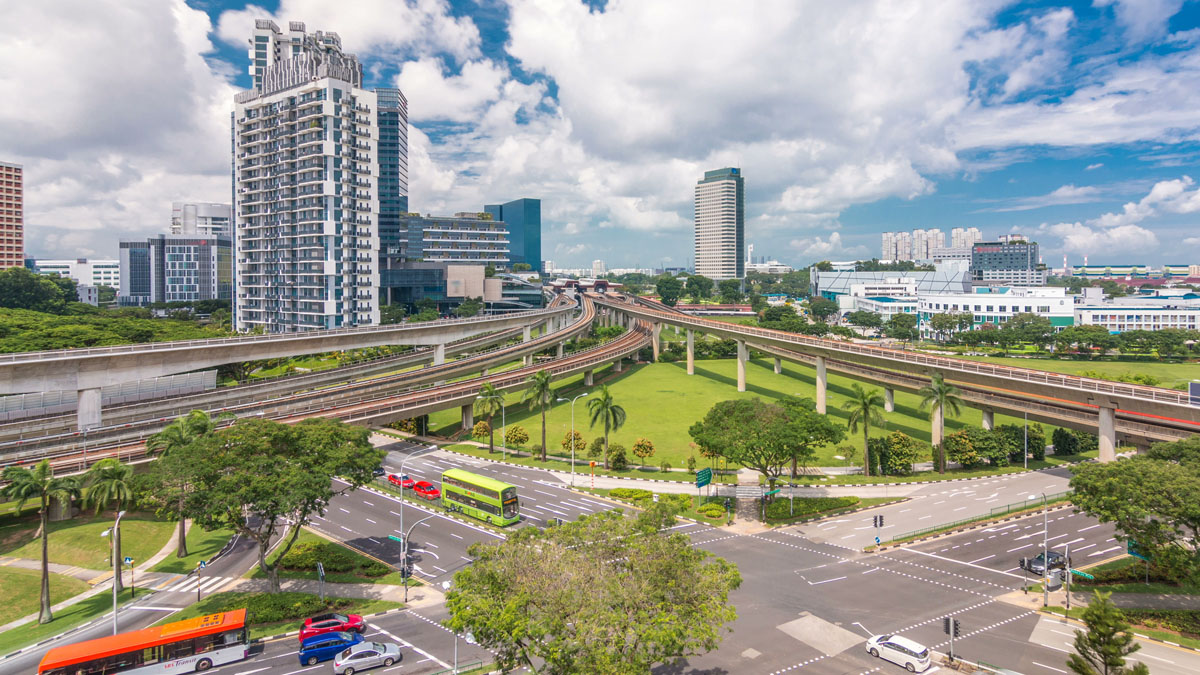
Singapore is widely recognized for having one of the most efficient and reliable public transit systems in the world. Its Mass Rapid Transit (MRT) network is clean, punctual, and easy to navigate, even for first-time visitors.

Why it stands out:

  • Extensive rail and bus coverage across the city
  • Clear signage and integrated payment systems
  • Strong investment in urban mobility infrastructure

For travelers, Singapore’s transit system makes it easy to explore the city without ever needing a car.

2. Tokyo, Japan

Tokyo’s public transit network is famous for its scale and efficiency. Despite serving millions of passengers daily, trains and subways remain remarkably punctual and well-organized.

Why travelers love it:

  • Extremely frequent service
  • Exceptional reliability and on-time performance
  • Seamless connections between train lines

While the system is large, clear maps and station signage make it manageable for visitors willing to plan ahead.

3. London, United Kingdom

London’s public transit system is one of the most comprehensive in Europe. With the Underground, buses, and regional rail services, travelers can reach nearly every corner of the city.

Key strengths:

  • Extensive coverage across Greater London
  • Contactless payment and visitor-friendly fare options
  • Strong integration between different transit modes

London’s network is especially useful for travelers staying outside the city center who still want easy access to major attractions.

4. Paris, France

Paris offers one of the densest public transit networks in the world, making it easy to move around the city quickly and affordably.

Why it works well:

  • Compact metro system with frequent stops
  • Affordable ticketing options
  • Strong connectivity to suburbs and airports

For travelers, Paris’s transit system is ideal for sightseeing without relying on taxis or rental cars.

5. Berlin, Germany

Berlin’s public transit system is known for its simplicity and reliability. The city’s U-Bahn, S-Bahn, trams, and buses work together seamlessly.

What makes it traveler-friendly:

  • Straightforward ticketing system
  • Good coverage day and night
  • Reliable service with minimal delays

Berlin’s network is especially appealing for travelers who want flexibility and ease of movement throughout the city.

Wrap-Up

The best public transit networks make travel easier, more affordable, and more enjoyable. Cities that invest in reliable, accessible transportation give travelers the freedom to explore without worrying about traffic, parking, or high transportation costs.

If getting around easily is high on your travel priority list, choosing destinations with strong public transit networks can make a big difference.

Methodology

To identify the best public transit networks, InsureMyTrip researchers reviewed a combination of global urban mobility datasets, transit performance indicators, and publicly available transportation data. Cities were evaluated based on factors that most impact traveler experience, including coverage, reliability, affordability, accessibility, and overall transit efficiency.

Sources

All data was pulled from the most recent information available at the time of publication and sourced from well-established transportation and economic authorities, including:

Supplemental data and contextual insights were reviewed from additional public transit research and urban mobility reports to support overall comparisons.

Best Cities for Traveling with Pets

Traveling with pets has become increasingly popular since the pandemic, with the pet population continuing to increase into 2025. Many pet owners would rather bring their furry friends along for the trip since pet daycare back home can get pricey. However, there is a lot to consider when traveling with a pet – like safety (do you have the right carrier?) and requirements (does your pet have an authenticated passport?).

InsureMyTrip conducted a study to identify the best pet-friendly travel destinations, evaluating cities based on the availability of pet-friendly hotels and activities, necessary pet travel documents, and ideal weather conditions. The goal? Helping travelers find the perfect vacation spots to enjoy with their pets.

Top 10 Best Cities for Traveling with Pets

Top 10 Best Cities for Traveling with Pets Map

Our top 10 cities for traveling with pets are as follows:

  1. Ottawa, Canada – 6.87 overall
  2. Rome, Italy – 6.21 overall
  3. Vienna, Austria – 5.67 overall
  4. Dodoma, Tanzania – 5.61 overall
  5. Warsaw, Poland – 5.41 overall
  6. Brasilia, Brazil – 5.41 overall
  7. Manila, Philippines – 5.33 overall
  8. New Delhi, India – 5.23 overall
  9. Berlin, Germany – 5.21 overall
  10. Bucharest, Romania – 5.17 overall

Top City for Traveling with Pets

Best City for Traveling with Pets Ottawa

Canada’s capital, Ottawa, is in top spot with an overall score of 6.87. With 51 pet-friendly activities available within the city, along with a high rating (4.55 out of 5) for their pet hospitals – the city provides some great options for pet owners. The city has an average hotel cost of $141, along with 50 options for pet-friendly hotels. For pet travel requirements, a Digital Endorsement is accepted which is issued by accredited veterinarians which can speed up the process when planning your trip.

As for the remaining top 10, Rome is in second place with the highest number of pet-friendly hotels (3,270 different options). Vienna, the capital of Austria, is in third with a high rating of B on the Animal Protection Index. Domoda of Tanzania is in fourth place, with the cheapest average cost of pet-friendly hotels at $28. In fifth place is Warsaw in Poland, with a high Green Space Index with 50% of the city recorded as urban green space.

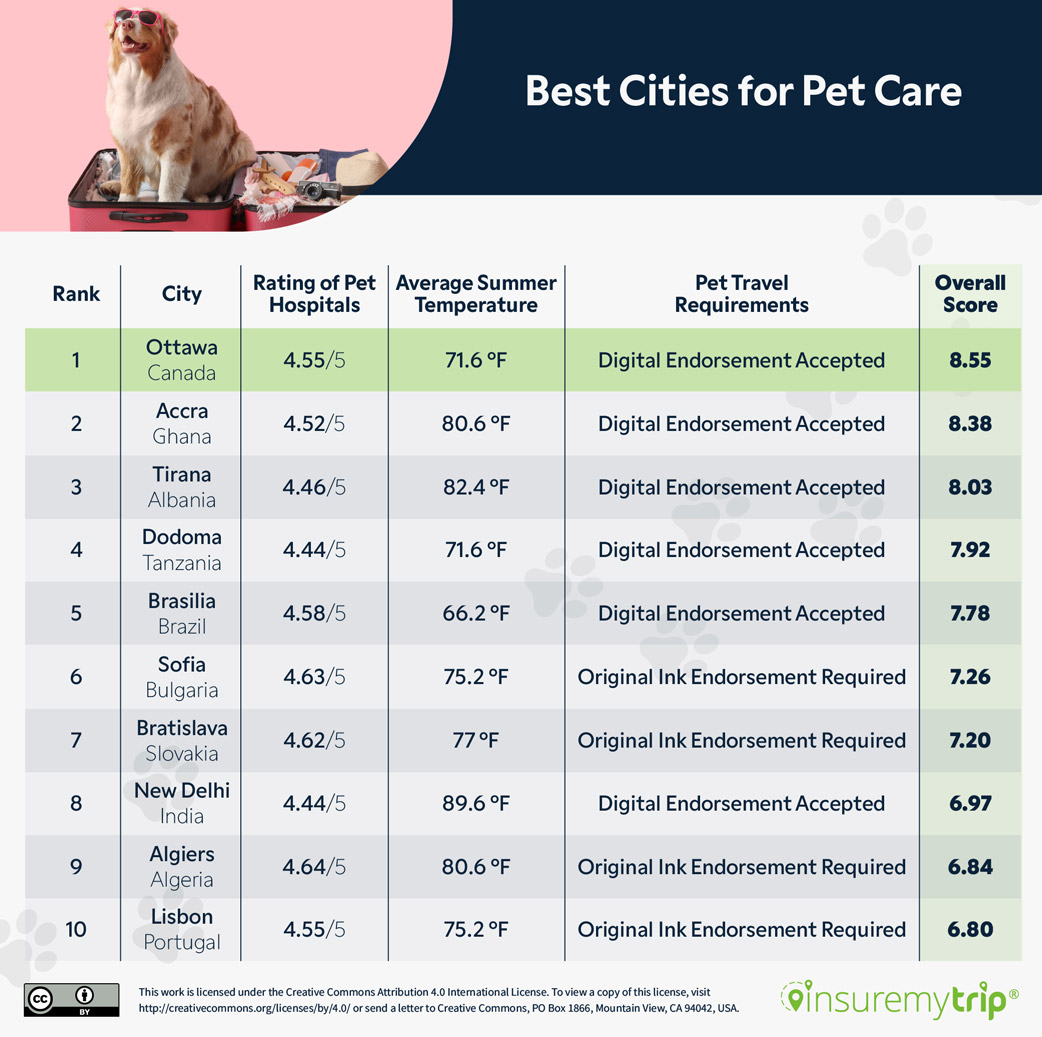
Best Cities for Pet Care

Top 10 Best Cities for Traveling with Pets Table

Ottawa is in first place again, followed by Accra, the capital of Ghana which also requires a Digital Endorsement. The best temperature for cats and dogs is between 75 and 78 degrees. While Accra’s summer temperatures average slightly higher at 80.6°F, it remains a pet-friendly destination. In third place is Tirana, Albania, one of the four European countries on the list, with warmer temperatures at 82.4°F.

Algiers in Algeria also has the highest rating for their pet hospitals at 4.64 out of 5.

Lisbon has an average temperature of 75.2 °F while the average temperatures in Sofia and Bratislava are 75.2 °F and 77 °F respectively, which all fall within the parameters of the best temperatures for pets.

Four countries including Bulgaria, Slovakia, Algeria and Portugal require Original Ink Endorsement from an USDA Endorsement Office, so these will need further planning to ensure the documents are accepted upon travel.

Methodology

For the list of cities used in the study, they were selected according to the number of visitors in 2024 and checked against the U.S. Travel Advisories. Each data point consists of the latest research available from reputable sources. All sources are city-specific level data points unless noted. The data was standardized using minmax normalization. The minmax normalization value is multiplied by 10 to create a score (between 0-10). A score of 10 is always the best result, while a score of 0 is the worst. Each destination is then ranked on their overall rating across all metrics to find which city is the best for traveling with pets.

Sources

Green Space Index – https://hugsi.green/ranking

Average Summer Temperature – https://www.accuweather.com/

Number of Pet-Friendly Activities – https://www.bringfido.com/

Number of Pet-Friendly Hotels – https://www.booking.com/

Average Cost of Pet-Friendly Hotels – https://www.expedia.com/

Rating of Pet Hospitals – https://www.google.com/maps

Animal Protection Index (Country-wide) – https://api.worldanimalprotection.org/

Pet Travel Requirements (Country-wide) – https://www.aphis.usda.gov/pet-travel/us-to-another-country-export

This field is for validation purposes and should be left unchanged.

Stay connected with the latest travel news & stories